Kevin J. Vanhoozer
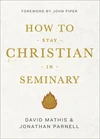
How to Stay Christian in Seminary
Christian Living
“Mathis and Parnell here contribute to a small but important stable of books that everyone thinking about attending or already enrolled in seminary should read. Studying theology is not an intellectual game, nor is it simply what you have to do to receive credentials. It is, rather, the project, both art and science, of living to God in intelligent, affectionate, and obedient response to God’s Word. The seminary is no ivory tower but a crucible in which Christian wisdom and spirituality are tested and refined—not only, or even primarily, by exams, but by the vital tests of everyday life. How to Stay Christian in Seminary alerts students to the real curriculum that undergirds degree structures: the pedagogy of the triune God that aims at forming the mind and heart of Jesus Christ in students and disciples.”
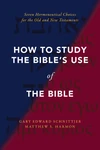
How to Study the Bible's Use of the Bible
Biblical Studies & Commentaries
“Scripture interprets Scripture” is an age-old Protestant hermeneutical rule of thumb; the NT use of the OT is a newer, and burgeoning, academic field. Schnittjer and Harmon argue compellingly that undergirding both notions is inner-biblical exegesis, specifically, the OT use of the OT, a relatively neglected topic. They also present a strong case for viewing the OT use of earlier Scripture as a primary resource for the NT use of the OT—and for Jesus’s own biblical interpretation. This was, for me, an eye-opening examination of the hermeneutical choices every student must make to understand the Bible’s use of the Bible, a matter of no little theological import for all who profess biblical authority.”
History & Biography
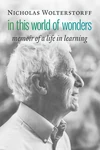
“Nick Wolterstorff’s memoir demolishes common stereotypes of academics. The role of the ivory tower pales in significance in comparison to his Dutch immigrant community in Minnesota. This would be a compelling story even if it were not a first-person eyewitness account of the extraordinary twentieth-century renaissance of Christian philosophy. Beyond that, it is a moving reflection on a life marked by grace, grief, and gratitude.”
Theology
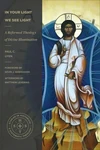
“Greg’s dissertation was without doubt the most creative thesis I have supervised—and the most challenging. It is an essay in pneumatology that treats the way in which the Holy Spirit interacts with the human spirit . . . Yet it is also an essay in postmodernity, the relation of theology to human developmental psychology, and the relation of time to eternity. Essentially, it’s an attempt to bring some of Kierkegaard’s insights into the nature of authentic faith to bear on contemporary theology. . . . He has an infectious enthusiasm for the connections he sees between thinkers, and even between disciplines. He is especially interested in the convergence between quantum physics, psychotherapy, and theology, having as they do the common theme of “relationality,”
Theology
“It is for freedom that Christ sets us free, but it’s hard to set forth in speech what freedom means. Postmoderns view freedom in terms of self-expression and self-determination, twin impulses that lie at the heart of contemporary culture’s rejection of institutional constraints. By way of contrast Bradley Broadhead contends that it is precisely by respecting certain constraints that jazz musicians are enabled to improvise—which is to say, enact freedom in a musical register. Jazz impovisation becomes a parable, not of the kingdom of God, but of Christian freedom in that kingdom. Jazz and Christian Freedom offers a biblical theology of freedom and then, within these canonical constraints, draws out insightful analogies between musical improvisation and Christian life together. You may never look at either jazz or Jesus in quite the same way again.”
Jesus Christ, Hermeneutics, and Scripture
Theology
“What is it like to read Scripture in union with Christ for the sake of greater Christlikeness? The answer, says Hans Burger, is to start not with hermeneutical philosophy or its epistemological starting point but, rather, with a properly theological hermeneutics—a reflection on what the triune God does with Scripture to renew our understanding. What results is a theologically virtuous hermeneutical circle, with salvation as the circumference and Christ at the center.”
History & Biography
“Mark Galli wisely chooses to focus on two areas of interest (and continuing controversy) to evangelicals—Barth’s doctrines of revelation and election. Things get especially interesting when Galli uses Barth, a ‘liberal’ theologian, to criticize evangelical overemphasis on subjective experience.”

Biblical Studies & Commentaries
“The great merit of Anizor's book is that it lets Scripture say who its readers are, how they should be reading God's word, and for what purpose. Anizor gives pride of place to biblical categories, opening up a helpful dialogue between biblical theology and the theological interpretation of Scripture. The church is not a generic interpretive community but a royal priesthood, elect and sanctified by God for the purpose of good works--and holy reading.”
Christian Living
Foreword
“To read Knowing God is to experience the reality of God, not simply the reality of J. I. Packer.”
Theology
“Knowing the Triune God is the newest, and probably the best, exhibit of the promise of ‘catholic and evangelical' theology for the contemporary Christian church, and it appears not a moment too soon. Written by theologians from a variety of ecclesiastical backgrounds, it is a compelling example of what a theology that takes its starting point and orientation from the communion of saints actually looks like. Even more impressive is the authors' concern to locate theology in the church, the school of the Holy Spirit, rather than to promote their own approaches as the latest, and therefore the best, theological craze. Here is no faddishness but, rather, a sober attempt to recover a wisdom accumulated over many centuries, though in remission during much of the modern era of theology. The emphasis on knowing the triune God by participating in the faith and life of the church is particularly to be welcomed.”
Theology
“Dietrich Bonhoeffer’s question ‘Who is Jesus Christ for us today?’ is as relevant and urgent in the twenty-first century as it was in the twentieth. The short answer is: he is our life. What the world needs now is a longer answer that would explain how a first-century Palestinian Jew is the way, truth, and flourishing life for the whole human race. Burger rightly argues that the gospel is about life in Christ, and he wisely insists on the importance of recovering the whole story, person, and work of Christ for understanding God and ourselves.”
Theology
“With its negative prefix, divine incomprehensibility appears to say that knowledge of God is impossible, thereby leading some people to become agnostic. Like appearances, however, prefixes too can be deceiving. By retrieving the classical formulation of the doctrine of divine incomprehensibility together with the all-important Creator-creature distinction, Ronni Kurtz ably demonstrates why divine incomprehensibility need not lead to agnosticism. Unlike God, Light Unapproachable is far from being incomprehensible. It is a clearly written, cogently argued, and readily comprehensible account of how theology can apprehend what the accommodating God has chosen to reveal about himself.”
Biblical Studies & Commentaries
“Like Aaron Copland in his classic What to Listen for in Music, Craig Bartholomew helps readers of the Bible to know what to listen for in Scripture and how to do so with attention and intelligence, in spirit and in truth. Bartholomew uses both ears, the academic and the devotional, and three hermeneutics (liturgical, ethical, and missional) to listen especially to what is most important: God’s address, words that guide and govern the church today.”
Theology
“(to borrow one of its key terms) the epitome of evangelical dogmatic Christology.”
Theology
“An instant must have for all serious theologians. McCall and Vickers have written the finest Wesleyan systematic theology in recent decades. I resonate deeply with their prayerful posture, their biblical grounding, their concern for the catholic tradition, and their lucid reasoning. Even in those places where I am not persuaded, I still value their aims and arguments. Love Divine has strangely warmed the heart of this Reformed theologian.”
Church Leadership & Ministry
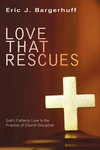
“Here is a biblically rooted, theologically formed, and long overdue case for conceiving church discipline as a loving practice of the church. Bargerhuff flies against the prevailing cultural winds that lead most of us, when we hear mention of 'discipline,' to complete the phrase with the other part of Foucault's title: '. . . and punish.' The evangelical church--and not only the evangelical!--desperately needs to recover this neglected church practice as an important means of edification, if not of grace itself.”
Martin Luther and the Rule of Faith
Theology
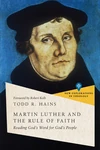
“Where would Luther stand in today's debates over how to read the Bible? 'Here I stand,' yes, but where is 'here'? Todd Hains demolishes the caricature of Luther encouraging individuals to read the Bible for themselves. In its place is the real, flesh-and-blood Luther who insists on reading the Bible according to the Rule of Faith: the three-corded catechism consisting of the Ten Commandments, Apostles' Creed, and Lord's Prayer. Where should we stand? On Scripture alone, to be sure, when read according to a hermeneutics of catechized faith.”
Theology
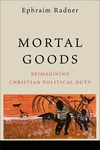
“the Christian Life “In a polarized age when edifying discussions about religion and politics are in short supply, Ephraim Radner asks us to rethink what we mean by ‘the good life.’ It begins with a self-imposed challenge to write a letter to his children about what makes life valuable. The letter he eventually pens, after pondering various God-given mortal goods (earthly gifts, like being part of a family, that constitute our brief lives in the world), is worth the price of the book—and has the potential to reorient, rehabilitate, and redeem our present political morass.”
NOTE: Only includes books currently in our catalog; not necessarily a complete list.
See something wrong on this page? Report a problem