Kevin J. Vanhoozer
Biography
Kevin J. Vanhoozer wrote Is There a Meaning in This Text? and First Theology, and co-wrote Theology and the Mirror of Scripture with Daniel J. Treier.
Bios generated by automated processes. · Report a problem
Books Endorsed by Kevin J. Vanhoozer
Theology
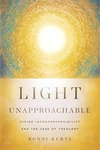
“With its negative prefix, divine incomprehensibility appears to say that knowledge of God is impossible, thereby leading some people to become agnostic. Like appearances, however, prefixes too can be deceiving. By retrieving the classical formulation of the doctrine of divine incomprehensibility together with the all-important Creator-creature distinction, Ronni Kurtz ably demonstrates why divine incomprehensibility need not lead to agnosticism. Unlike God, Light Unapproachable is far from being incomprehensible. It is a clearly written, cogently argued, and readily comprehensible account of how theology can apprehend what the accommodating God has chosen to reveal about himself.”
Biblical Studies & Commentaries
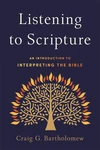
“Like Aaron Copland in his classic What to Listen for in Music, Craig Bartholomew helps readers of the Bible to know what to listen for in Scripture and how to do so with attention and intelligence, in spirit and in truth. Bartholomew uses both ears, the academic and the devotional, and three hermeneutics (liturgical, ethical, and missional) to listen especially to what is most important: God’s address, words that guide and govern the church today.”
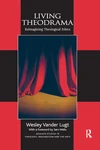
“The turn to theater is not yet as well-known as the earlier turns to language and narrative, but it may prove to be every bit as far-reaching, not least for theology and theological ethics. Vander Lugt’s richly researched and clearly written work helps us make the turn, and will elicit oohs and aahs as readers come to appreciate the theatrical model and take in the exciting new vistas for integrating doctrine and life, theory and practice, formation and performance. At the core of the proposal is an important and creative suggestion about the need for disciples to learn disponibility: the readiness to receive, and respond fittingly to, any and all divine initiatives, in particular the offer of life in Christ. Living Theodrama builds and improves on previous work in theatrical theology and ethics and will become a must-read for anyone wanting to join the conversation.”
Theology
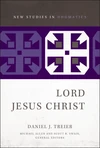
“(to borrow one of its key terms) the epitome of evangelical dogmatic Christology.”
Theology
“An instant must have for all serious theologians. McCall and Vickers have written the finest Wesleyan systematic theology in recent decades. I resonate deeply with their prayerful posture, their biblical grounding, their concern for the catholic tradition, and their lucid reasoning. Even in those places where I am not persuaded, I still value their aims and arguments. Love Divine has strangely warmed the heart of this Reformed theologian.”
Church Leadership & Ministry
“Here is a biblically rooted, theologically formed, and long overdue case for conceiving church discipline as a loving practice of the church. Bargerhuff flies against the prevailing cultural winds that lead most of us, when we hear mention of 'discipline,' to complete the phrase with the other part of Foucault's title: '. . . and punish.' The evangelical church--and not only the evangelical!--desperately needs to recover this neglected church practice as an important means of edification, if not of grace itself.”
Martin Luther and the Rule of Faith
Theology
“Where would Luther stand in today's debates over how to read the Bible? 'Here I stand,' yes, but where is 'here'? Todd Hains demolishes the caricature of Luther encouraging individuals to read the Bible for themselves. In its place is the real, flesh-and-blood Luther who insists on reading the Bible according to the Rule of Faith: the three-corded catechism consisting of the Ten Commandments, Apostles' Creed, and Lord's Prayer. Where should we stand? On Scripture alone, to be sure, when read according to a hermeneutics of catechized faith.”
Theology
“In a polarized age when edifying discussions about religion and politics are in short supply, Ephraim Radner asks us to rethink what we mean by ‘the good life.’ It begins with a self-imposed challenge to write a letter to his children about what makes life valuable. The letter he eventually pens, after pondering various God-given mortal goods (earthly gifts, like being part of a family, that constitute our brief lives in the world), is worth the price of the book—and has the potential to reorient, rehabilitate, and redeem our present political morass.”
Christian Living
“What does presuppositional apologetics (Jerusalem) have to do with Paul's Areopagus argument (Athens, literally)? Frame's answer is Nature's Case for God, a brief, beautifully written biblical argument for finding evidence of God in cosmos (the natural world) and conscience (human nature). According to Scripture, it takes two witnesses to sustain a claim, and Frame here invites us to listen again to the witness of the created order and our own selves. I particularly enjoyed the chapters making a case, from nature, for the oneness, greatness, goodness, and presence of God.”
New Testament Theology in Light of the Church’s Mission
Biblical Studies & Commentaries
“In addressing so many different aspects of the New Testament in light of the church's mission to spread the gospel, this collection of essays by I. Howard Marshall's friends, colleagues, and former students instantiates, and resolves, the problem of unity and diversity that stands at the heart of NT theology. It is therefore a most fitting tribute, both to the man and his work.”
Theology
“"either-ors" and contends for the importance of both divine sovereignty and divine solicitude in equal measure; third, an approach that espouses divine determinism and divine temporality. No One Like Him takes on the most intractable intellectual challenges of contemporary evangelical theology.”
Old Testament Cosmology and Divine Accommodation
Biblical Studies & Commentaries
“As with any archaeological dig, unearthing ancient Near Eastern backgrounds for Old Testament exegesis is a delicate affair, and those who attempt it quickly get their hermeneutical hands dirty. John Hilber brings a new tool, relevance theory, to the task, enabling him to sift through cosmological assumptions and identify the ones that are operative. What Hilber here discovers is not an artifact, but a precious interpretive insight that shines new light on the divine accommodation of Scripture.”
Theology
“I am grateful for Andrew Campbell’s argumentatively astute yet nonviolent engagement with nonviolent atonement theologians. He honors their ‘concern for the oppressed Other’ even as he preserves, with a little help from P. T. Forsyth, the core concern of traditional atonement theology, namely, the saving substitutionary work of Christ on the cross. This is a book that goes a significant way to reconciling those who argue about reconciliation in Christ.”
Christian Living
“Here is a doctrine of creation that focuses―rightly in my opinion―less on origins than on ongoings, namely, the practical consequences of our createdness for everyday human existence. Jaeger argues convincingly that human flourishing, in every aspect of our lives, depends entirely on living in dependence on God, and along the grain of the created order. Ordinary Splendor confirms Calvin’s belief that there is no knowledge of what it is to be human without knowledge of God the Creator.”
Theology
“Why do nice people do terrible things? Sherlock Holmes was on to something when he assured Watson that 'the lowest and vilest alleys of London do not present a more dreadful record of sin than does the smiling and beautiful countryside.' Here are five theological explanations of humanity's perennial predicament, five ways of reading the story of Adam's fall and its consequences. The responses each of the authors gives to the four others are especially helpful in identifying the key talking points as well as respective strengths and weaknesses.”
Theology
“This book begins with Vickers’ and McCall’s eyewitness testimonies to the ‘Asbury Awakening’ and then moves on to theological reflection. The result is a calm, clear, and compelling meditation on God’s presence and activity in the world. Here is a theologically informed testimony that, like the Asbury Outpouring itself, leads to repentance and deep joy at God’s life-changing forgiveness and grace.”
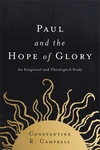
Theology
“Con Campbell here proves himself to be the Melanchthon to Vos’s Luther, systematically (and exegetically) examining all the relevant texts that touch on what the apostle Paul has to say about the Christian hope of glory. Following Vos, Campbell makes a compelling case that the Pauline eschatology sees all of reality as participating in two realms and two ages, existing side by side and vying for the hearts and minds of every human being, with Jesus Christ himself being the invasion of the new in the midst of the old. In bringing into focus the hope of glory, Campbell has produced the perfect tonic for world-weary pessimists pessimists who think that history is a series of one drab thing after another.”
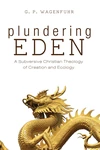
Theology
“No one likes to be accused of being a parasite with delusions of grandeur, but this is the opening note sounded in the prophetic trumpet blast that is Plundering Eden. Like Nietzsche’s madman, Wagenfuhr rushes into our global village announcing the death not of God but civilization, that doomed project of thinking humanity could by building things wrest order from chaos. The Babel-onian captivity from which Wagenfuhr seeks to free us consists of a wrong way of imagining the world, namely, as something to be mastered, often through violence, with devastating effects on nature and society alike. The solution lies in giving up the juvenile fiction that we are masters of our own fate and submitting our imaginations to the logic of creation and new creation, that is, to the vision of the world created and recreated in, through, and for Jesus Christ.”
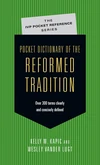
Pocket Dictionary of the Reformed Tradition
Theology
“For students of theology who have no home in a confessional tradition, this book will prove a valuable resource. Like the best travel guides, it orients newcomers to a strange new land (e.g., Calvinism, covenant theology), its leading lights (e.g., William Ames, Herman Bavinck, Karl Barth), their beliefs (e.g., common grace, infralapsarianism, sola scriptura) and customs (e.g., mortification, paedobaptism, worship), thereby enabling readers to understand and speak the language of its Reformed inhabitants. It may even prompt strangers to the tradition to become sojourners. And even when it does not, readers will find the book's value to be disproportionate to its small size.”
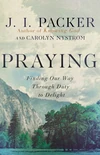
Prayer & Spiritual Formation
“If prayer is speaking to God, then one reason people struggle with praying is that they don't know how to speak to strangers. This is why Packer has written a book on prayer that is less 'how to' than a 'to whom' book. In fact, Packer, the 'last Puritan,' has, with the help of Carolyn Nystrom, written a book that is as practically helpful as it is doctrinally sound. Only such a dual approach can do justice to their topic, prayer, 'the essence of Christian existence.'”
Books Authored or Contributed to by Kevin J. Vanhoozer
NOTE: Only includes books currently in our catalog; not necessarily a complete list.
See something wrong on this page? Report a problem