Kevin J. Vanhoozer
The Beginning and End of All Things
Theology
“'Christian doctrine serves Christian discipleship.' I now have the perfect illustration to show how this is so. Edward Klink's book rescues the doctrine of creation from its captivity to debates over six-day creationism/evolution, convincingly demonstrating that without a robust understanding of creation, the church risks overspiritualizing both salvation and the Christian life. Klink gives a biblical theological answer to the philosophical conundrum, Why is there something rather than nothing? He shows how creation brings into focus the big picture of the Bible, which is all about heaven coming to earth—God's creation project achieved in Jesus Christ.”
Theology
“Scholars have frequently pursued quests for the historical canon, attempting to understand the process of its formation, literary composition, and ideological function. Matthew Emerson paves the road less taken, drawing systematically on a wide range of doctrines to provide a theological account of the canon's divine origin, unified christological content, and ecclesial function. The result: a valuable account of both what the canon is (a theological rule) and how it should be read (in a theologically ruled manner).”
Theology
“In the past I’ve argued that determining the right relationship between God, Scripture, and hermeneutics comprises the right preliminary question for systematic theology: its ‘first theology.’ Brad East’s The Church’s Book has convinced me that ecclesiology too belongs in first theology. In weaving his cord of three strands (insights gleaned from a probing analysis of John Webster, Robert Jenson, and John Howard Yoder), East offers not a way out but a nevertheless welcome clarification of where the conflict of biblical interpretations really lies: divergent understandings of the church. This is an important interruption of and contribution to a longstanding conversation about theological prolegomena.”
Theology
“on the cross that have for too long been rivals rather than partners: the penal substitution and Christus Victor theories of atonement. The third strength is that it reconciles the story of redemption (biblical theology) and its logic (systematic theology). Three tensions; three proposed resolutions: blessed are the peacemakers!”
Theology
“Sanders has a gift for making the deep things of theology—in this case, the doctrine of the Trinity—clear and compelling rather than shallow and simplistic. This is as good an introduction to the essentially Trinitarian shape of evangelical faith and practice of which I’m aware. Every evangelical should be able to explain how the gospel is Trinitarian and the Trinity a summation of the gospel, and Sanders shows us how. He makes a convincing case that there is nothing wrong with the evangelical church in North America that a good dose of Trinitarian theology, if absorbed into the bloodstream of the body of Christ, could not cure. So take, drink, and prepare to be edified.”
Theology
“More and more evangelicals seem to be willing to consider the possibility that, because God is love, each and every person who has ever lived will eventually be saved. What are we to make of this soteriological mission creep? McClymond's magisterial study provides both a thorough historical investigation of the ancient and modern roots of Christian universalism and a thoughtful theological evaluation of their presuppositions, claims, and consequences. He shows that what on the surface appears to be not simply good but the best news--if universal salvation is indeed better than the traditional good news of salvation in Christ for those who have faith--on closer analysis ends up undermining the logic of the biblical gospel and of Christian orthodoxy. It turns out that grace that is necessary is no longer grace, but that to which creatures are entitled. Important issues require important books, and McClymond has produced what I suspect will be the definitive treatment of Christian universalism for years to come.”
Ethics, Culture & Social Issues
“Socrates famously said ‘The unexamined life is not worth living,’ but Oliver O’Donovan argues that the everyday lives we lead are worth examining, particularly in light of the gospel of Jesus Christ. This is a profound reflection on the mutual service theology and ethics can give to one another by the premier theological ethicist of his generation.”
Theology
“If theology is the study of God and all other things in relation to God, then the focus of a doctrine of creation is 'all other things.' This is a tall order and one reason why it is difficult to come up with a list of masterpieces on the subject. This book ranges widely, covering topics from food to philosophy, but always in relation to the goodness of God, the created order, and its implications for humanity. The authors show convincingly that there is nothing in the world to which God the Creator cannot rightly declare, 'Mine, and for my glory!'”
Theology
“Despite the Bible’s status as the number one bestseller in history, there is still confusion about what it says, what it is, and whether Christians should be following the Scriptures rather than Christ. Thompson answers these questions and thoroughly debunks this fateful contrast. In doing so, he performs a signal service to the church. In order to follow Christ, disciples must follow the story and trust the testimony of Scripture, for the story is ultimately about Christ, and Christ identifies its testimony as God’s own word. But the real contribution of Thompson’s book is the way its chapters make explicit the doctrine of Scripture implicit in Jesus’s own teaching.”
Preaching & Worship
“The Drama of Preaching addresses postmodern sloth by calling hearers to respond to what God is doing in Christ--a theater of reconciliation--and thus to get real.”
Theology
“Reno here urges us to turn conventional exegetical wisdom on its head: instead of doing theology in accordance with Scripture, we should be reading Scripture in accordance with church doctrine. Protestants may (again) protest, yet the doctrines that guide Reno’s theological interpretation are themselves the result of the church’s painstaking attempt to read Scripture rightly. The End of Interpretation is both a bold claim about what it means to be biblical and a helpful illustration of the ‘state of the art’ of theological exegesis by one of its foremost proponents.”
The Fall and Redemption of Conscience
Theology
“Though he doesn’t mention it, Ferrari exposes the shortcomings Krister Stendahl’s 1963 influential essay ‘The Apostle Paul and the Introspective Conscience of the West,’ insisting that a full-orbed biblical picture of conscience is less about guilty subjective interiority than the constant awareness, before God, of our human covenantal vocation, its privileges and responsibilities. Here is a properly theological account of conscience as created, fallen, redeemed, and perfected that will be of interest not only to introspective Westerners, but to people of every tribe and nation.”
Biblical Studies & Commentaries
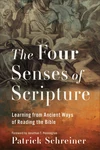
“Patrick Schreiner boldly retrieves the quadriga, the ancient fourfold sense of Scripture, not as a flight from literal meaning (or biblical authority) but as its fulfillment. He adores the allegories that Luther abhorred but only because the spiritual senses are rooted in the literal sense, present Christ, and guide Christians in their earthly lives and heavenly hopes. A timely and important proposal to recover a mode of reading proper to the church's Scripture rather than the academy's Bible and to heal the long-standing breach between critical biblical studies and theological interpretation.”
Theology
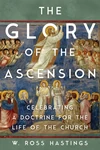
“The Glory of the Ascension is a different kind of Christology from above that takes its bearings not from Christ's pre-existence (i.e., the eternal Logos) but, rather, from Christ's post-existence (i.e., resurrection, ascension, heavenly session). In retrieving this undeservedly neglected episode, Ross Hastings convincingly shows how the ascension is central to Jesus' identity and work, to the whole of salvation history, and ultimately to the glorious end for which the world was created in the first place.”
Theology
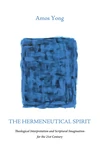
“This is a valuable essay collection that contributes to the discussion of theological interpretation of scripture (TIS) by a leading evangelical and Pentecostal theologian. Yong advocates pneumatological interpretation of scripture (PIS) for the sake of a truly robust Trinitarian hermeneutics. PIS is not simply TIS done by Pentecostals, but TIS done in the light of the Pentecost event and, as such, is the privilege, and responsibility, of all Christians.”
Theology
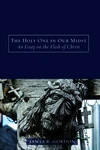
“That 'the Word became flesh' lies at the heart of Christian confession, theology, and celebration (Christmas) alike. Yet, despite the incarnation’s ancient doctrinal pedigree, questions remain. The virtue of James R. Gordon's The Holy One in Our Midst is its ability to investigate further, and clarify, this essential mystery without rendering it non-mysterious. It does so by explaining that Benjamin of Christian doctrines, the extra Calvinisticum, with a refreshing blend of analytic and a theology of retrieval. Gordon argues convincingly that the Son's existence beyond the pale of his flesh is not a bizarre appendix to Christology but an essential part of its conceptual grammar, and one that is more deeply biblical that many theologians have realized.”
Theology
“Amidst the spate of books on the Holy Spirit and the church, Studebaker's stands out for its emphasis not on power but authority. A valuable discussion that expands on what Bernard Ramm called the 'pattern of authority' while preserving the integrity of the Spirit's relationship to Jesus Christ and the Scriptures.”
Theology
“The love of God has long languished as the Benjamin of theological concepts. Not only has it not received the sustained attention that it deserves, but it has not always been clear where to locate it—in a discussion of the divine attributes, the Trinity, soteriology, creation, providence, somewhere else, everywhere? Another problem is that the love of God is too often conflated with images of human love. John Peckham rightly takes aim at this mistake and at other popular myths about God's love. Here is a study of God's love, based on the whole canon of God, that I admire even at those points (and there are a few) where I disagree.”
NOTE: Only includes books currently in our catalog; not necessarily a complete list.
See something wrong on this page? Report a problem