Kevin J. Vanhoozer
Biography
Kevin J. Vanhoozer wrote Is There a Meaning in This Text? and First Theology, and co-wrote Theology and the Mirror of Scripture with Daniel J. Treier.
Bios generated by automated processes. · Report a problem
Books Endorsed by Kevin J. Vanhoozer
Revelation and Reason in Christian Theology
Theology
“This inaugural volume from the first Theology Connect conference lives up to its name and vocation: each chapter refuses the typical modern reflex of seeing reason and revelation as opposites and offers fresh insight into matters at the heart of Christian theology. Readers will find compelling biblical, historical, and theological arguments for beating what were once opposing epistemological swords into prolegomenal plowshares.”
Theology
“Collins and Walls make a vigorous case for why Rome should not insist on being the exclusive center of the catholic church. Roman centricity deconstructs true catholicity by suggesting that Orthodox and Protestant churches are deficient; it similarly undermines canonicity (i.e., biblical authority) insofar as sola scriptura is virtually displaced by sola Roma. Collins and Walls remind us that what continues to divide Christians 500 years after the Reformation are not simply disagreements over doctrine or the authority and interpretation of Scripture, but differences over the nature of the church and the meaning of catholicity.”
Theology
“One way to summarize the story of the Bible is to say, with Jesus (quoting Isaiah 9:2), 'The people who walked in darkness have seen a great light.' Today there is conflict not only between the kingdoms of light and darkness but also over rival sources of light. Moderns, who previously celebrated the light of reason, are now groping for ways to cope with post-Enlightenment, postmodern blues. Ike Miller has written a tract for the times that sets forth a Christian theological account of how the God who is light distributes his light to the world in Jesus Christ via the Spirit-illumined readings of the biblical texts that testify to him. This is a dogmatic account of the triune economy of illumination that, in shedding light on Augustine and Barth and other readers of Scripture, participates in the very phenomenon it describes. Take up and see!”
Christian Living
“In my day people searched for themselves by going to India, practicing Transcendental Meditation, or just going surfing. Today people surf the internet, search for themselves online, hire personal life coaches, and attend enrichment seminars in a never-ending quest for self-fulfillment. Jeremy Treat speaks a prophetic and urgent note to the generations: what matters most is seeking not yourself but the kingdom of God. Seek First is a clearly written and much-needed book that explains what Jesus meant by commanding his disciples to seek first the kingdom of God. Spoiler alert: it’s not about doing one more thing but about inhabiting the framework that makes sense of and rightly orients everything else. Treat offers the best kind of life coaching: pastoral, theological direction for experiencing the reign of Jesus Christ in every aspect of our lives. Read this book, seek the kingdom, and discover the meaning of life.”
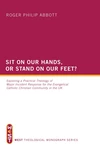
Sit on Our Hands, or Stand on Our Feet?
“Systematic theologies offer little help in knowing what to do in the face of major catastrophes, or what to say when one comes face to face with anguished victims. The great merit of Abbott's book is that he thinks theologically about just such practical matters relating to distinctly Christian disaster management. He builds in interesting ways on my own approach to theology as theatrical direction for practical understanding: drama of doctrine, meet human trauma. Abbott shows in compelling ways how pastoral carers formed by the story of Christ can help heal the wounds to personal narratives shattered by disaster.”
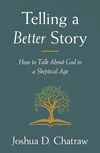
Apologetics
“If human beings are not simply rational animals, as Aristotle thought, but storytelling animals, what are the implications for Christian apologetics? In our post-Christian society, the Bible is no longer considered “the greatest story ever told,” if it is told at all. Today, various stories pit one community’s identity and interests against others. Accordingly, those who wish to defend gospel truth must learn how to recover the plausibility, goodness, and beauty of the Bible’s account of what God is doing through Jesus Christ to make things right. Telling a Better Story proceeds with proper confidence to do just that. Josh Chatraw is faithfully attuned to the biblical text while listening with one ear cocked to the various cultural texts (including films) that compete for the attention and allegiance of our hearts and minds. The way forward, he rightly argues, is to show that the Christian story answers our burning questions and leads to flourishing communities. By telling a better story, and embodying it, we “take captive every thought to make it obedient to Christ.”
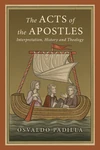
Biblical Studies & Commentaries
“This study of the book of Acts presents Luke not only as author but also as exemplary historian, storyteller and theologian. Luke's three-stranded cord of authorial discourse is on conspicuous display in his composition of Peter's, Stephen's, Philip's and Paul's speeches. Where other textbooks often focus on the narratives in Acts (e.g., Pentecost) and the practices of the early church, Padilla highlights the speeches in Acts and their continuing significance, going beyond the call of New Testament duty by dialoguing with postliberal theologians and asking whether they can do justice to the speeches in Acts and in particular their truth claims. The result is an introductory text that not only illumines the book of Acts, but also encourages Christians today to 'act out the acts of the apostles' (John Donne), to speak out their speech acts.”
Theology
“Christian theology is never more countercultural, or theological, than when it speaks of God’s attributes; they challenge humanity’s puny and often idolatrous ideas of divine perfection. Bray makes a concise yet important contribution to this project by distinguishing God’s essential and relational attributes, and by showing how this distinction preserves the integrity of our relationship to the one true God. Christians can train themselves for godliness (1 Tim. 4:7) and teach in ways that accord with godliness (1 Tim. 6:3) only if they have some idea of what God is like. Indeed, if Calvin is right, we can achieve knowledge of ourselves only by understanding what God is like, for humans are created in his image. For all these reasons, what could have been an abstract discussion of God’s being is anything but that. Highly recommended!”
World Religions
“I teach a whole course on what makes theology Augustinian because I believe Augustine has much to offer today's church. I therefore welcome and resonate with the thought experiment behind The Augustine Way--namely, to articulate what Augustine would likely say and do as a pastor and defender of the faith if he were alive today.”
Theology
“Who wouldn’t want Augustine as a local church pastor? Scintillating biblical commentary, penetrating cultural analysis, profound theological reflections—what’s not to like? Joey Sherrard, a pastor charged with discipling others, has made Augustine his mentor, and in this book he shares with us what he has learned about Augustine the person and his habitual pastoral practices. The topics Sherrard selects are apt, the pastoral practices he examines are edifying, and the wisdom he gleans from Augustine’s writings is richly instructive. He has clearly learned much from his mentor, and we (pastors or not) who take up and read Sherrard can learn from him too.”
Theology
Foreword
“This is the kind of theology that edifies the church. While many theoretical discussions about certain far-flung doctrines may be hard to relate to the everyday life of the Christian, this discussion of God's beauty is different. Sound doctrine is always salutary, but it does not always stir the heart. By way of contrast, this study of the beauty of the Lord aims not only to give the reader right understanding, but also right heartedness: a right perspective on and a passion for the fittingness of God's plan of redemption.”
The Beginning and End of All Things
Theology
“'Christian doctrine serves Christian discipleship.' I now have the perfect illustration to show how this is so. Edward Klink's book rescues the doctrine of creation from its captivity to debates over six-day creationism/evolution, convincingly demonstrating that without a robust understanding of creation, the church risks overspiritualizing both salvation and the Christian life. Klink gives a biblical theological answer to the philosophical conundrum, Why is there something rather than nothing? He shows how creation brings into focus the big picture of the Bible, which is all about heaven coming to earth—God's creation project achieved in Jesus Christ.”
Biblical Studies & Commentaries
“Ever the sociologist, Smith forces readers to confront and account for the stubborn fact that not everyone who ascribes supreme authority to 'what the Bible says' hears God saying the same thing. Even those, like me, who are not persuaded by his 'truly evangelical' alternative will benefit from this strong dose of realism about the way in which evangelicals actually interpret and appeal to the Bible.”
Theology
“Scholars have frequently pursued quests for the historical canon, attempting to understand the process of its formation, literary composition, and ideological function. Matthew Emerson paves the road less taken, drawing systematically on a wide range of doctrines to provide a theological account of the canon's divine origin, unified christological content, and ecclesial function. The result: a valuable account of both what the canon is (a theological rule) and how it should be read (in a theologically ruled manner).”
Theology
“In the past I’ve argued that determining the right relationship between God, Scripture, and hermeneutics comprises the right preliminary question for systematic theology: its ‘first theology.’ Brad East’s The Church’s Book has convinced me that ecclesiology too belongs in first theology. In weaving his cord of three strands (insights gleaned from a probing analysis of John Webster, Robert Jenson, and John Howard Yoder), East offers not a way out but a nevertheless welcome clarification of where the conflict of biblical interpretations really lies: divergent understandings of the church. This is an important interruption of and contribution to a longstanding conversation about theological prolegomena.”
Theology
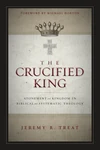
“Jesus came proclaiming the kingdom of God but then died on the cross. The first great virtue of The Crucified King is that it tackles head-on this great riddle at the heart of the New Testament, clarifying how what happened to Jesus, far from contradicting his message, served rather to confirm and explain it. The book’s second strength is that it reconciles two views of Jesus’ death on the cross that have for too long been rivals rather than partners: the penal substitution and Christus Victor theories of atonement. The third strength is that it reconciles the story of redemption (biblical theology) and its logic (systematic theology). Three tensions; three proposed resolutions: blessed are the peacemakers!”
Theology
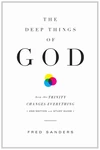
“Sanders has a gift for making the deep things of theology—in this case, the doctrine of the Trinity—clear and compelling rather than shallow and simplistic. This is as good an introduction to the essentially Trinitarian shape of evangelical faith and practice of which I’m aware. Every evangelical should be able to explain how the gospel is Trinitarian and the Trinity a summation of the gospel, and Sanders shows us how. He makes a convincing case that there is nothing wrong with the evangelical church in North America that a good dose of Trinitarian theology, if absorbed into the bloodstream of the body of Christ, could not cure. So take, drink, and prepare to be edified.”
Theology
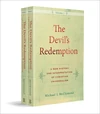
“More and more evangelicals seem to be willing to consider the possibility that, because God is love, each and every person who has ever lived will eventually be saved. What are we to make of this soteriological mission creep? McClymond's magisterial study provides both a thorough historical investigation of the ancient and modern roots of Christian universalism and a thoughtful theological evaluation of their presuppositions, claims, and consequences. He shows that what on the surface appears to be not simply good but the best news--if universal salvation is indeed better than the traditional good news of salvation in Christ for those who have faith--on closer analysis ends up undermining the logic of the biblical gospel and of Christian orthodoxy. It turns out that grace that is necessary is no longer grace, but that to which creatures are entitled. Important issues require important books, and McClymond has produced what I suspect will be the definitive treatment of Christian universalism for years to come.”
Ethics, Culture & Social Issues
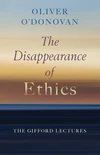
“Socrates famously said ‘The unexamined life is not worth living,’ but Oliver O’Donovan argues that the everyday lives we lead are worth examining, particularly in light of the gospel of Jesus Christ. This is a profound reflection on the mutual service theology and ethics can give to one another by the premier theological ethicist of his generation.”
Books Authored or Contributed to by Kevin J. Vanhoozer
NOTE: Only includes books currently in our catalog; not necessarily a complete list.
See something wrong on this page? Report a problem