Kevin J. Vanhoozer
Christian Living
“What does presuppositional apologetics (Jerusalem) have to do with Paul's Areopagus argument (Athens, literally)? Frame's answer is Nature's Case for God, a brief, beautifully written biblical argument for finding evidence of God in cosmos (the natural world) and conscience (human nature). According to Scripture, it takes two witnesses to sustain a claim, and Frame here invites us to listen again to the witness of the created order and our own selves. I particularly enjoyed the chapters making a case, from nature, for the oneness, greatness, goodness, and presence of God.”
Theology
“"either-ors" and contends for the importance of both divine sovereignty and divine solicitude in equal measure; third, an approach that espouses divine determinism and divine temporality. No One Like Him takes on the most intractable intellectual challenges of contemporary evangelical theology.”
Old Testament Cosmology and Divine Accommodation
Biblical Studies & Commentaries
“As with any archaeological dig, unearthing ancient Near Eastern backgrounds for Old Testament exegesis is a delicate affair, and those who attempt it quickly get their hermeneutical hands dirty. John Hilber brings a new tool, relevance theory, to the task, enabling him to sift through cosmological assumptions and identify the ones that are operative. What Hilber here discovers is not an artifact, but a precious interpretive insight that shines new light on the divine accommodation of Scripture.”
Theology
“I am grateful for Andrew Campbell’s argumentatively astute yet nonviolent engagement with nonviolent atonement theologians. He honors their ‘concern for the oppressed Other’ even as he preserves, with a little help from P. T. Forsyth, the core concern of traditional atonement theology, namely, the saving substitutionary work of Christ on the cross. This is a book that goes a significant way to reconciling those who argue about reconciliation in Christ.”
Theology
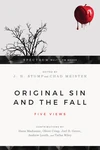
“Why do nice people do terrible things? Sherlock Holmes was on to something when he assured Watson that 'the lowest and vilest alleys of London do not present a more dreadful record of sin than does the smiling and beautiful countryside.' Here are five theological explanations of humanity's perennial predicament, five ways of reading the story of Adam's fall and its consequences. The responses each of the authors gives to the four others are especially helpful in identifying the key talking points as well as respective strengths and weaknesses.”
Theology
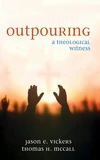
“This book begins with Vickers’ and McCall’s eyewitness testimonies to the ‘Asbury Awakening’ and then moves on to theological reflection. The result is a calm, clear, and compelling meditation on God’s presence and activity in the world. Here is a theologically informed testimony that, like the Asbury Outpouring itself, leads to repentance and deep joy at God’s life-changing forgiveness and grace.”
Theology
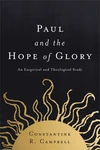
“Con Campbell here proves himself to be the Melanchthon to Vos’s Luther, systematically (and exegetically) examining all the relevant texts that touch on what the apostle Paul has to say about the Christian hope of glory. Following Vos, Campbell makes a compelling case that the Pauline eschatology sees all of reality as participating in two realms and two ages, existing side by side and vying for the hearts and minds of every human being, with Jesus Christ himself being the invasion of the new in the midst of the old. In bringing into focus the hope of glory, Campbell has produced the perfect tonic for world-weary pessimists pessimists who think that history is a series of one drab thing after another.”
Theology
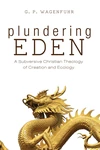
“No one likes to be accused of being a parasite with delusions of grandeur, but this is the opening note sounded in the prophetic trumpet blast that is Plundering Eden. Like Nietzsche’s madman, Wagenfuhr rushes into our global village announcing the death not of God but civilization, that doomed project of thinking humanity could by building things wrest order from chaos. The Babel-onian captivity from which Wagenfuhr seeks to free us consists of a wrong way of imagining the world, namely, as something to be mastered, often through violence, with devastating effects on nature and society alike. The solution lies in giving up the juvenile fiction that we are masters of our own fate and submitting our imaginations to the logic of creation and new creation, that is, to the vision of the world created and recreated in, through, and for Jesus Christ.”
Pocket Dictionary of the Reformed Tradition
Theology
“For students of theology who have no home in a confessional tradition, this book will prove a valuable resource. Like the best travel guides, it orients newcomers to a strange new land (e.g., Calvinism, covenant theology), its leading lights (e.g., William Ames, Herman Bavinck, Karl Barth), their beliefs (e.g., common grace, infralapsarianism, sola scriptura) and customs (e.g., mortification, paedobaptism, worship), thereby enabling readers to understand and speak the language of its Reformed inhabitants. It may even prompt strangers to the tradition to become sojourners. And even when it does not, readers will find the book's value to be disproportionate to its small size.”
Prayer & Spiritual Formation
“If prayer is speaking to God, then one reason people struggle with praying is that they don't know how to speak to strangers. This is why Packer has written a book on prayer that is less 'how to' than a 'to whom' book. In fact, Packer, the 'last Puritan,' has, with the help of Carolyn Nystrom, written a book that is as practically helpful as it is doctrinally sound. Only such a dual approach can do justice to their topic, prayer, 'the essence of Christian existence.'”
Preaching & Worship
“Preaching is at once one of the most familiar communicative acts and one of the most mysterious. Other forms of public speaking can be prophetic (remember Chris Rock's opening monologue at the Oscars?). Yet preaching is more than social commentary or stand-up comedy, for preachers proclaim God's gospel and speak for God. How is such a marvel possible? Sam Chan uses fresh tools--speech act philosophy--to bolster the Reformers' intuition that preaching (unlike theology) is not simply talk about God, but God's own personal address to the gathered assembly of the faithful today.”
Church Leadership & Ministry
“The sermon is the best weapon in the pastor’s arsenal for taking every thought, and our imaginations, captive to Christ, which is why preaching may be the quintessential theological act. But what kind of act is it? Ahmi Lee describes the two prevailing models, didactic and dialogical, and proposes a third model, the dramatic, that preserves the best of the other two (the emphasis on doctrine and life experience, respectively) while avoiding their weaknesses. She rightly sees that the ministry of proclaiming God’s Word is an invitation to disciples to enter into the historical drama of Jesus Christ as actors who participate in this story made flesh. Lee’s proposal for a theodramatic homiletic provides pastors with the tonic they need to communicate the gospel effectively to our increasingly secularized, disenchanted age.”
Biblical Studies & Commentaries
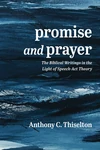
“This short study shines new light on two of the most familiar forms of biblical discourse, precisely by presenting them together. Both divine promise and human prayer are deeply interpersonal speech acts related to the ‘institutional fact’ of God’s covenant. In asking what promises and prayers do, Thiselton once again shows his ability to integrate exegesis, theology, and philosophy in illuminating new ways. And it comes with a bonus appendix: a magisterial survey of the use of speech act theory in biblical studies in general.”
Theology
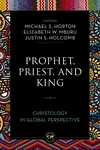
“Here are theologians from around the world confessing Christ from their own locations in ways that edify the whole church. This first volume of the Theology Together series epitomizes the marriage of contextuality and catholicity the global church so desperately needs, wonderfully fulfilling the promise of the series name.”
Re-Views by an Evangelical Biblical Critic
Biblical Studies & Commentaries
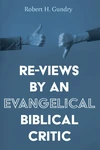
“These incisive reviews help evangelical readers to chart, and ponder anew, important late twentieth-century developments in New Testament studies. There are myriad nuggets of wisdom, including: ‘The task of Christians is to show that believing in Jesus can be intelligent and truly pious at the same time.’ This led me to conduct a hasty review of my own life; I am hard-pressed to think of a higher recommendation than that.”
Theology
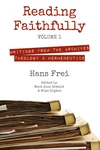
“Imagine the excitement that would accompany the discovery of Brahms' sketches for a fifth symphony, or unpublished letters from Einstein on the theory of relativity. These pieces provide something similar: Hans Frei's emerging thinking about biblical narrativity and theology. This volume is further evidence of the seminal nature and continuing significance of Frei's close theologizing.”
Theology
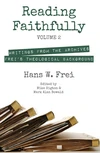
“Imagine the excitement that would accompany the discovery of Brahms' sketches for a fifth symphony, or unpublished letters from Einstein on the theory of relativity. These pieces provide something similar: Hans Frei's emerging thinking about biblical narrativity and theology. This volume is further evidence of the seminal nature and continuing significance of Frei's close theologizing.”
Preaching & Worship
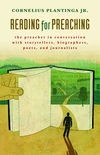
“This beautifully written gem of a book admirably fulfills its sign function by pointing not at itself but at the thing it is about -- other people's books. Plantinga makes as good a case as I have come across for the importance of reading many books to enrich the preaching of the Christian's one book. Here is no recipe for pretty preaching, which only distracts from the biblical message, but rather a discerning call to `Take, read' and more effectively minister God's word.”
Science & Faith
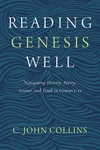
“In the beginning and throughout the process of reading, there is interpretation. This is true of all books but especially of the Bible. The peoples of the earth have for centuries been reading Genesis according to their own hermeneutical kinds. And God saw that it was not always good. I therefore thank God for Jack Collins’s masterful guide to reading Scripture’s good-faith communication in good faith, with literary sensitivity, an ear to the history of interpretation, and an eye on the present scientific context. Reading Genesis Well lives up to its title and then some. The first third treats biblical interpretation in general and is itself worth the price of the book. The rest of the book puts his reading strategy to work. He builds on C. S. Lewis’s critical and imaginative approach to reading then offers a contextually sensitive account of just what the author of Genesis is saying and doing in chapters 1–11. It’s important for reading the rest of Scripture to get the beginning right, and Collins here provides the resources for doing just that.”
NOTE: Only includes books currently in our catalog; not necessarily a complete list.
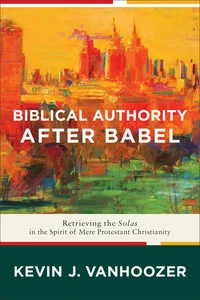
Biblical Authority after Babel
Theology
Theology
Theology
Theology
Theology
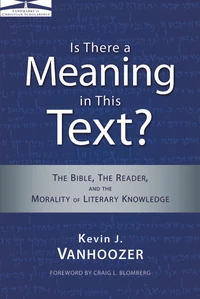
Is There a Meaning in This Text?
Theology
Biblical Studies & Commentaries
Pictures at a Theological Exhibition
Theology
Theology
See something wrong on this page? Report a problem