Mark Johnson
Theology
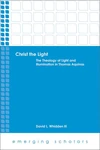
“Contesting the assumption that the doctrine of illumination has little to no place in the thought of Thomas Aquinas—even though it played an important role in the thought of many of his patristic and medieval predecessors and contemporaries—this work skillfully demonstrates the functions illumination performs in key aspects of Aquinas’ theology, paying special attention to its christological dimension. In carefully considering not only Aquinas’ magisterial Summa but also the little-studied Scriptural commentaries, this work makes an important contribution to the study of these texts even as it brings a fundamental but neglected facet of Aquinas’ thought into relief." —Lydia Schumacher Wycliffe Hall, University of Oxford "In old history books, one finds the Dark Ages giving way to the Renaissance and then, before too long, to the Enlightenment. Readers of this book, however, will find themselves awash in light: physical light, divine illumination, light as a metaphor and an analogy, God as pure light, the light of reason and virtue, and the light of Christ. Aquinas here is shown to be a preeminent theologian of light, a light that washes upon us from God and Christ. We are in David Whidden's debt for so eloquently portraying what post-Enlightenment thinkers all too easily overlook: the divine light shining upon us and within us and calling us to Himself." —Matthew Levering Mundelein Seminary "This marvelous book shows how expansive is the notion—the guidance—of light in Thomas Aquinas's thought, almost every portion of which invokes some form of light in order to be seen, to be understood. David Whidden's book shows us the range of light in Aquinas and will spawn further research into distinct topics of light in Aquinas's theology. A promising book from a promising scholar.”
Theology
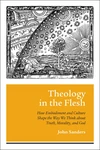
“Over the past three decades, the cognitive sciences have given us profound insight into the central role of our bodily experience in all the ways we understand, reason, and communicate with others. In a highly nuanced and sensitive way, John Sanders shows how our everyday body-based meaning structures (such as images, schemas, metaphors, and metonymies) shape how we understand major biblical concepts, from God to salvation to the moral life. With analytical rigor, but also with charity in interpretation, he argues that our human concepts give us our only way to understand the Bible and that we must respect the different interpretations that follow from the nature of human understanding.”
No books by this person in our catalog yet.
See something wrong on this page? Report a problem