Matthew W. Levering
Biography
Matthew W. Levering wrote Dying and the Virtues.
Bios generated by automated processes. · Report a problem
Preaching & Worship
“In our broken world, in the midst of personal sin and social sin, in the midst of suffering and death, we need salvation. But even many Christians—all too often including myself—have forgotten what ‘salvation’ might mean, beyond the simple desire for health and prosperity. What Fr. Anatolios does in these sermons is to reintroduce, step by step, what salvation in Christ is and why it is the pearl of great price. These beneficent sermons are an invitation to enter into the kingdom of Christ, the kingdom of salvation, here and now.”
Ethics, Culture & Social Issues
“Richly instructive. . . . Bill Cavanaugh intrepidly goes where few theologians dare to go, and his questions and answers remain resolutely theological against the strongest temptations to bow to the accepted discourses of our age. Those seeking to understand the perspectives that inspire Caritas in Veritate and Evangelii Gaudium need search no further: this is the book to read.”
Theology
“Fr. Nichols takes an extremely complex and important topic -- the Church's holiness, unity, catholicity, and apostolicity -- and delivers a marvelously limpid, succinct, and balanced theological portrait. He lovingly illuminates the Church herself, the mystery of communion with the God the Father in Christ and the Holy Spirit. No contemporary work on the Church comes close to the level of Father Nichols's achievement here.”
Five Proofs of the Existence of God
Philosophy
“A watershed book. Feser has completely severed the intellectual legs upon which modern atheism had hoped to stand.”
Prayer & Spiritual Formation
“I am overjoyed to discover this book. These extraordinary prayers, superbly arranged, have met a deep need in my heart. The book will be henceforth on my bedside table beside my Bible. Get yourself a copy of this book, pray with it, and share this book with others. A beacon of Christ-centered, God-centered light in dark times!”
Philosophy
“Louis Markos has done it again! If anything, this book is even more valuable than his earlier From Plato to Christ. Plato is generally easier to read, and so Aristotle is more in need of retrieval. Markos shows that, while there are places where Aristotle needs correction, his thought is immensely helpful for Christian reflection on God, human nature, virtue, friendship, politics, and rhetoric. May this book receive the wide audience it deserves, for the benefit of biblically grounded Christian faith and culture.”
Philosophy
“This is an urgently needed book. That educated persons too often have no knowledge of Plato is a real disaster. With his usual flair and concision, Markos brings forward Plato's greatest insights and describes their reception in the Christian tradition, as well as their rejection by Hobbes and Nietzsche. May the Christian retrieval of the best of Plato—joined by his student Aristotle—commence in earnest!”
Christian Living
“If any book deserved to be a bestseller, this mini-masterpiece is the one. Who would have thought something titled Funerals could be so good? Perry teaches us not only about funerals but about the entirety of Christian dying and living. Pastorally wise, theologically sane, and beautifully written, this book should be Christianity Today's book of the year.”
Ethics, Culture & Social Issues
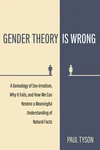
“In this immensely erudite book, Paul Tyson argues for basic common-sense biological sex, without denying the fact that biological sex can be lived out in many ways. His core goal is to persuade policymakers and academics to stop persecuting people who insist on the fact that a man cannot become a woman and vice versa. A society built upon the notion that biological sex is false or at least radically fungible will, indeed, be one that produces far more injustices than were endured by non-sexually-conforming persons in past societies. Tyson provides an ample genealogy for the current academic, cultural, and political understanding of the transgender cause. He identifies roots as far back as Peter Abelard’s and William of Ockham’s nominalism, and continuing on through the anti-realist epistemologies of Kant and his praxis- and will-focused heirs, joined to left-wing Hegelian understandings of the march of history. Nietzsche, Marx, Critical Theory, Postmodernism, and Judith Butler, among many others, play their part here. Calling for a return to rationality grounded in realist metaphysics, Tyson shows that the result could paradoxically assist modern liberalism in being properly liberal.”
Theology
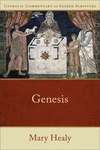
“The New Testament volumes in this series have served me as a constant resource: deeply scholarly, firmly in touch with the Catholic tradition, and impressively readable and teachable. But among Christians today, the Old Testament often is neglected or treated as unintelligible—with the result being a tragic impoverishment of faith. Giszczak's inaugural Old Testament volume is evidence that the same qualities that have set this series apart will be on display in its commentaries on the Old Testament. All Catholics should have these trustworthy volumes at hand.”
Theology
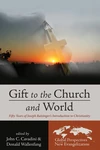
“Is there a theology worthy of the name that does not introduce its readers to the One who ‘introduces’ the Father through the Spirit? If in this sense all true theology is an introduction to Christianity, then Joseph Ratzinger’s corpus—of which his Introduction to Christianity is an exemplification—focuses always on introducing us to the person of Jesus Christ in the face of the difficulties that threaten to block him from our mind and heart. Thus Ratzinger’s Introduction has an enduring place in teaching modern theologians how and why to do theology. With its deft elucidations of Ratzinger’s approach, the present volume should lay the foundations not only for the future of Ratzingerian studies but for the future of Catholic theology as a discipline.”
Theology
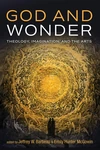
“This volume calls all of us to become ‘wonderstruck theologians’—a timely call indeed! But how might we learn again to be filled with awe? Here we find mundane answers that give marvelous witness to the glory of God: worship, children, homemaking, art, poetry, iconography, even lament rooted in longing. The essays in this book should reawaken the church to the nature of theological labor.”
Theology
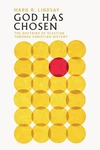
“What a rich and stimulating book! Lindsay interprets election not solely in light of the various historical controversies regarding predestination, but also in light of the correlative understandings of the body politic and especially the Jewish people. In so doing he offers a theology of election or predestination that is also a subtly drawn political theology as well as an insistent engagement of ongoing Judaism within Christian theology proper. A rare work of systematic theology whose range actually lives up to its systematic ambitions.”
Theology
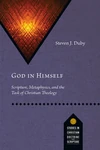
“This is a magisterial book; every Christian theologian should read it. With clarity and charity, Steven Duby cuts through the misunderstandings that have grown up around the doctrine of God. By the end of his book, the treasure of the God who reveals himself in Jesus Christ is shining forth with renewed brilliance, and our speech about him has been purified so as to be fully capable of praise. Duby accomplishes all this by drawing on the patristic and medieval traditions as received and engaged by Reformed thinkers, in conjunction with a broad mastery of modern philosophy, biblical exegesis, and theology. An amazing accomplishment!”
God's Israel and the Israel of God
Biblical Studies & Commentaries
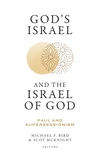
“This bold book puts all the main issues on the table. And the main issues are complex and urgent indeed, ranging from whether or in what sense non-Messianic Jews are still in a covenantal relationship with God, to what the Messiah Jesus accomplishes for Jews and Gentiles, to the status of Torah observance in Christian communities, to the significance of the experience of Messianic Jewish synagogues, to the meaning of ‘supersessionism’ and its relation to the horrific persecution and violence committed against Jews (in the name of Jesus Christ!) by Christians over the centuries. I heartily commend this book as a deeply illuminating and instructive starting point for anyone who wishes to enter into this crucial conversation.”
Theology
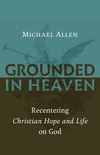
“Can we still say, with the disciple Philip, ‘Lord, show us the Father, and we shall be satisfied’ (John 14:8)? Is the desire of our hearts ordered to everlasting communion with the Holy Trinity, so that eternal life will rejoice us insofar as we share in Life? Instructed preeminently by John Calvin and John Owen, Michael Allen urges that our encounter with Jesus Christ’s eschatological words and deeds must give us the spiritual-mindedness and self-denial that configure us (and this world) to the Lord whom we love. Ecumenical readers will find this book to be, at its core, an exercise in sound biblical and Augustinian good sense.”
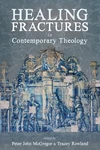
Healing Fractures in Contemporary Theology
Theology
“Comprised of beautifully written and spiritually powerful essays, this is an instructive and aspirational book. It instructs by bringing together a valuable set of interlocking views of the theological task. It is aspirational because it reminds us that resolving all these fractures is beyond any individual’s abilities. No wonder that the greatest theologians have generally been members of religious orders! Each of the essays could be a book in itself. Very highly recommended!”
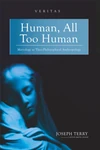
Theology
“In this dazzling work, Joseph Terry argues for a Marian theological anthropology along lines that speak both to reason and joy. In these pages one attends to the voices of an extraordinarily catholic range of theologians and philosophers, as Terry brings to bear the whole tradition.”
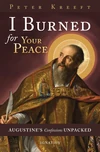
“For those intimidated by Augustine's prose, Kreeft illuminates it with pithy distinctions and images drawn from our own times. This book is further evidence in favor of Kreeft's insistence that the greatest thinkers--far too often imprisoned by the very scholars who study them--in fact belong to us all.”
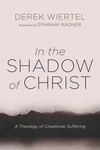
Theology
“Displaying the immense fruitfulness of the vision of his mentor Ephraim Radner, Wiertel addresses the presence of disease and death in the fabric of animal life: ‘nature’s ontic strife.’ Inspired also by Aquinas, Bulgakov, and Bouyer, he shows that Hugh of St. Victor’s figural vision of creation as an ark and temple whose center is the sacrificial Lamb should instruct contemporary theologians about the nature of Scripture and about the death-ridden world. A brilliant work.”
NOTE: Only includes books currently in our catalog; not necessarily a complete list.
See something wrong on this page? Report a problem