Néstor Medina
Biography
Néstor Medina has served as a Visiting Scholar at the Emmanuel College Centre for Religion and Its Context in Toronto. Medina edited Reading In-Between (2019) and Theology and the Crisis of Engagement (2013).
Bios generated by automated processes. · Report a problem
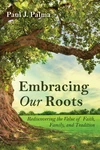
“In a rich biographical and self-exploratory excursion, Paul Palma dismantles prevailing understandings of Italian American ethnoracial identity, religious tradition, and history in the United States. Reflecting on his Italian ancestry, he exposes the social discrimination and marginalization these people faced upon their arrival in the United States. He uncovers that not all Italians were Catholic. Among them, there emerged a strong contingent of Pentecostals, who formed what would become, today, the International Fellowship of Christian Assemblies. In the end, he brings it all together under the rubric of being made in the image of God. This affirmation rejects destructive racist attitudes that can be countered through learning to value other humans as God's creatures.”
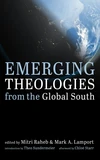
Emerging Theologies from the Global South
Theology
“With renewed force and creatively relevant articulations, each of these essays invites us to look at the Global South as a locus of theological production. Beyond traditional theological schools, the scholars in this book remind us of the richly diverse and quickly changing composition of the global church and the contextual particularity of its plural theological cacophony.”
Arts & Literature
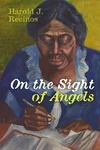
“With incisive and prophetic prose, Harold Recinos uncovers the social maladies that meter alone cannot measure. His poetics accentuate lived life by evoking the undecidable syllables of pain, hopelessness, despair, and abandonment, while unearthing the rhythms of injustice, racism, and marginalization. Embodying the identifiably struggles of Latinas/os, Recinos’s dexterous imagination paints for us a glimpse into the stubborn determination of this people to continue living in spite of divinely censured incalculable social and cultural forces of dehumanization.”
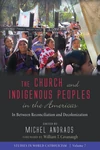
The Church and Indigenous Peoples in the Americas
Theology
“This book charts a new path for understanding the legacy of Western European and Anglo North Atlantic colonialism. Diverse Indigenous and non-Indigenous scholars throughout the Americas reflect on how colonial projects have meant the destruction of Indigenous communities, peoples, cultures, and religious traditions, with Christianity playing a central role in their colonization. However, new networks of resistance and solidarity are emerging, reminding us that dialogue with Indigenous communities is essential to decolonize the Christian tradition.”
NOTE: Only includes books currently in our catalog; not necessarily a complete list.
See something wrong on this page? Report a problem