Stanley K. Stowers
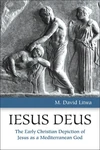
Theology
“In Iesus Deus, M. David Litwa surveys six of the more significant ways in which early Christians from the first through the third centuries CE drew on common reservoir of ancient Mediterranean conceptions of deity as models for expressing the ultimate significance of Jesus, namely his divine origin and deity. This is an extraordinarily well-written, nuanced, convincingly argued and methodologically sophisticated comparative study which breaks new ground in understanding a centrally important aspect of the formation of early Christology. The author makes use of an impressive array of primary and secondary sources over which he has enviable control. This book gets four stars and should be required reading for all serious students of early Christian thought.” —David E. Aune University of Notre Dame “M. David Litwa’s Iesus Deus marks a major breakthrough in scholarship on early Christianity. The book manages to overcome the scholarly apologetic segregation of early Christian beliefs about Jesus Christ from Greek and Roman dominated Mediterranean culture and to demonstrate the fit of these beliefs in that Hellenistic context. A great deal of writing about the ‘purely Jewish’ Christ crumbles with this book.”
Patterns of Persuasion in the Gospels
Biblical Studies & Commentaries
“Patterns of Persuasion in the Gospels will open the next stage in Synoptic studies. Mack and Robbins have returned synoptic criticism to the road it missed when Bultmann and Dibelius decided to ingnore Greco-Roman education and rhetoric. Starting from a sophisticated and detailed study of what the rhetorical handbooks say about the elaboratioin of chreiai, they illuminate the most basic techniques and logic which the Gospel writers used in developing the Jesus traditions. It is required reading for everyone with a serious interest in the critical study of the Gospels.”

The So-Called Jew in Paul’s Letter to the Romans
Biblical Studies & Commentaries
“A seismic shift in Pauline scholarship, these essays show how construing Romans's interlocutor as a Gentile richly refigures what Christ meant for the world's peoples. The detailed investigations of the focused topic yield a powerfully argued case.”
No books by this person in our catalog yet.
See something wrong on this page? Report a problem