Stephen C. Meyer
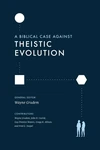
A Biblical Case against Theistic Evolution
Theology
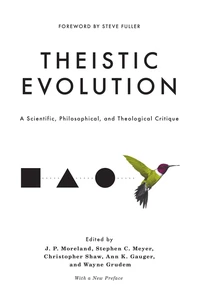
“In this new streamlined volume critiquing the concept of theistic evolution, Professor Grudem and several other distinguished theologians highlight the many theological problems that arise from trying to synthesize mainstream neo-Darwinian evolutionary theory with any theologically meaningful notion of design or creation. They show that facile claims about how ‘God used the evolutionary process to create’ conceal a host of incoherencies, ambiguities, and theological problems. This is a detailed, dispassionate and scholarly volume.”
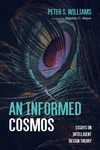
Apologetics
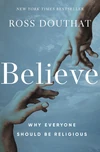
“the God question” that will appeal to those who may lament the loss of a religious foundation for culture (and their own lives), but who cannot get over the line to personal belief. By highlighting new scientific discoveries that reveal a deep, underlying order and design in the universe and aspects of common experience that we often take for granted, Douthat shows that theism explains signposts to ultimate reality that the popular default worldview of secular materialism does not. Using an accessible commonsense style of reasoning, Douthat renders plausible and compelling what many today assume is implausible and untenable: traditional religious belief. A powerful, highly readable, commonsense guide to the most pressing questions of human existence.”
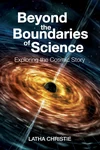
Beyond the Boundaries of Science
Science & Faith
“An intriguing approach for interpreting the Bible—that the days of Genesis 1 coincide with the physical progression of the universe’s history as revealed by modern science.”
Science & Faith
“A fascinating study of a much overlooked aspect of the origins controversy.”
Does Science Make God Irrelevant?
Ethics, Culture & Social Issues
“Hans Madueme provides an irenic and evenhanded account of the common approaches to understanding the relationship between science and religious belief. In answer to his question ‘Does science make God irrelevant?,’ he gives a resounding no! I highly recommend this short introduction to an important subject.”
God's Crime Scene Participant's Guide
Evangelism & Missions
“With the tenacity of a homicide detective and the careful reasoning of a scholar, Jim Wallace uses the forensic method of scientific investigation to establish - beyond reasonable doubt - that God exists!”
On the Origin of Consciousness
Science & Faith
“On the Origin of Consciousness presents a Christian theological understanding of consciousness. In developing his argument, Scott Ventureyra provides a comprehensive overview of different models for the interaction between faith and science, and he describes the role philosophy plays in guiding the integration. What makes the book unique is his insightful interactions with the work of such intelligent design researchers as Bill Dembski and myself. He identifies the concept of information as not only central in the discussion of the origin and development of life but also in understanding consciousness’ origin and operation. Ventureyra’s approach is both compelling and practical. I highly recommend this book for anyone interested in how theology can help guide scientific research on consciousness and in the topic in general.”
Ethics, Culture & Social Issues
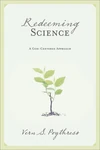
“Poythress shows how a proper understanding of biblical theology makes possible not just one but many credible harmonizations of biblical and scientific truth. Along the way, he provides an insightful defense of the theory of intelligent design as a viable scientific research program. His examination of the mathematical beauty inherent in the universe gives yet another compelling reason to acknowledge the wisdom and design that lie behind physical reality.”
Apologetics
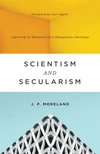
“J. P. Moreland is one of the great Christian philosophers of our time. He has shown persuasively that we can know God just as well as we can know anything else. If, as philosophers tell as, knowledge constitutes ‘justified true belief,’ Moreland has shown that we can have such beliefs about God—and, thus, objective, as well as subjective, knowledge of him. In this trenchant critique, he shows not only how the ideology of scientism undermines the justifiable confidence that people should have in their knowledge of God, but that scientism ultimately defeats itself. Scientism claims that hard sciences such as physics, chemistry, and biology provide the only genuine knowledge of reality. Yet, as Moreland shows, scientism does not satisfy its own requirement, because it is not itself based upon scientific evidence or scientific method. Instead, Moreland shows with many concrete examples that many people in our culture simply assume that the hard sciences provide the only foundation for knowledge, leaving them with an impoverished and materialistic view of reality that denies them the joy, hope, and meaning that comes from the knowledge of God. For this reason, Scientism and Secularism is a philosophical treatise with a practical message for anyone wanting to live life more abundantly in accord with genuine knowledge of God. Highly recommended.”
Science & Faith
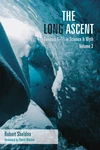
“What can a plasma space physicist contribute to understanding the first chapters of the book of Genesis? Quite a lot, as it turns out. Robert Sheldon brings a wealth of scientific understanding and insight to understanding the sequence of events recorded in those early chapters, applying a breadth of original research—about relevant astrophysical, geological, historical and meteorological data—to his interpretive task. The result is an intriguing and original synthesis that demonstrates a surprising and profound alignment between biblical and scientific testimony.”
Discipleship & Christian Education
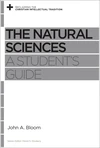
“Bloom has written an excellent overview of the main philosophical issues facing Christians working in the natural sciences. He shows that not only is there no conflict between science and belief in God, but there are now many scientific discoveries that support such belief. A clear, concise, and highly readable treatment. I highly recommend it, especially for college students.”
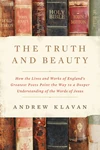
Arts & Literature
“Andrew Klavan has written a stunningly original work that defies classification by genre. It is, at once, literary, philosophical, and deeply Christian—and, for all those reasons, personally enriching. Klavan tells how the English Romantic poets—Coleridge, Wordsworth, Keats, and others—set about to use the artistic imagination to salvage “man’s instinctive knowledge of the supernatural” just as materialistic philosophy was taking root in European intellectual circles during the early nineteenth century. Klavan, a master storyteller, provides a fascinating and informative short history of these literary giants. In the process, he explains why their poetry is important and how it helped to reveal that “this seemingly indifferent universe is, in fact, a personal creator’s act of love.” Then, in a theological finale, he applies the insights of the great poets to illuminate the true meaning of some of the most challenging aspects of the teachings of Christ. The Truth and Beauty is full of insight about romantic love and human mortality, the perils of utopian politics, the nature of men and women, the meaning of life and the moral order, science and the possibility of knowledge, and especially, the teachings of Jesus as recorded in the Gospels. Not since reading C. S. Lewis’s The Great Divorce in college has a single book induced such deep and constructive theological reflection in me, as I suspect it will for many other readers.”
NOTE: Only includes books currently in our catalog; not necessarily a complete list.
See something wrong on this page? Report a problem