Stephen O. Presley
Biography
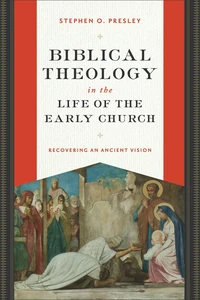
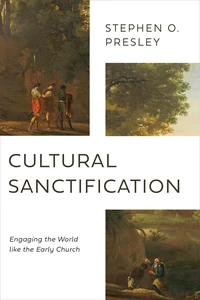
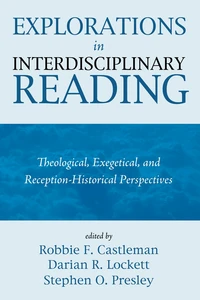
Stephen O. Presley earned a PhD from the University of St. Andrews. Presley has served as associate professor of church history at The Southern Baptist Theological Seminary in Louisville, Kentucky, and has also served as a senior fellow for religion and public life at the Center for Religion, Culture, and Democracy. Presley has served as Assistant Professor of Biblical Interpretation at Southwestern Seminary. Presley wrote Biblical Theology in the Life of the Early Church (2025) and Cultural Sanctification (2024), and edited Explorations in Interdisciplinary Reading (2017).
Bios generated by automated processes. · Report a problem
Apologetics
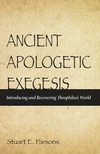
“Parsons' work breaks through the prevailing anachronistic assumptions surrounding the performance of Scripture in the work of Theophilus of Antioch and recasts the apologist as a careful and thoughtful exegete. His sensitivity to the genre of protreptic writings and attentiveness to even the most subtle echoes and allusions of Scripture make an important contribution to the understanding of the development of Christian hermeneutics in the post-apostolic age.”
Theology
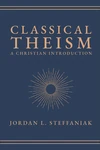
“In his introduction to classical theism—or what he terms mere classical theism—Steffaniak presents an important book aimed at rehabilitating the doctrine of God, the foundation of the church’s theology. He argues that recovering the vision of God found in the great tradition is essential for the church’s faith and practice today, especially as it navigates new philosophical and moral challenges. This book is a readable and reliable guide to the attributes of God, certain to encourage and edify any Christian leader seeking to deepen their love for God.”
Theology
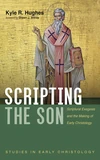
“In his new book, Kyle Hughes pulls back the ancient exegetical curtain so we can watch the performance of Scripture and Christology in the early church. This was no routine drama, but a lively dialogue between the Old Testament and the apostolic testimony, with the person of Christ playing the leading role. Anyone interested in patristic exegesis, biblical interpretation, or Christology should pick up a copy and follow along with the script.”
Theology
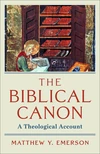
“For too long, the question of canon has been subjected to modern empirical inquiries that jettison basic theological assumptions. In this timely volume, Emerson reminds the people of God that they hold in their hands a precious canon given by the triune God as the rule for all matters of faith and practice. His compelling theological account of what canon is and how it is formed offers a needed framework for understanding Scripture rightly. Drawing from the wisdom of the premodern tradition, especially Irenaeus of Lyons, Emerson charts a better path forward, one that envisions Scripture as one book, given by one author, and centered on one subject and story, and he teaches us how to read it accordingly. This is an important and engaging book that deserves a wide readership.”
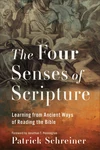
Biblical Studies & Commentaries
“In recent years, due in no small part to the significant philosophical and cultural shifts of the twentieth century, the evangelical church is awakening to the intellectual resources of the great tradition. Patrick Schreiner's new book is an important contribution to this conversation that I hope is read widely. The book is a thorough yet accessible engagement with the quadriga that threads together philosophical, theological, and biblical considerations in the history of biblical interpretation, separating the wheat from the tares along the way. Anyone interested in learning to read God's Holy Writ with the theological giants of the past should pick up a copy right away.”
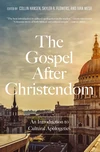
Apologetics
“Just like the weather, culture is changing rapidly, and Christians are quickly discovering how challenging it is to navigate the emerging cultural climate. The Gospel After Christendom is an excellent resource to help them chart a way forward. Drawing from a diverse group of Christian thinkers, it not only frames the key issues but also offers practical wisdom for cultural engagement. I encourage pastors and Christian leaders to pick up a copy and explore how Christianity can thoughtfully and faithfully engage in cultural apologetics.”
NOTE: Only includes books currently in our catalog; not necessarily a complete list.
Ethics, Culture & Social Issues
See something wrong on this page? Report a problem