Wilfred M. McClay
Biography
Wilfred M. McClay wrote Figures in the Carpet.
Bios generated by automated processes. · Report a problem
Ethics, Culture & Social Issues
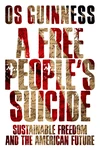
“In a passionate work that blends historical-cultural analysis with moral exhortation, Os Guinness finds at the heart of America's culture wars something different than what many observers have seen. He identifies a 'freedom war,' a struggle over the very concept of freedom itself. As the Founders well understood, it is not enough for Americans to invoke endlessly the name of 'freedom' when they no longer agree as to what it means or what ends freedom is meant to serve. Guinness warns that freedom cannot long endure unless it is consecrated to purposes beyond itself. It is a warning worth heeding.”
Theology
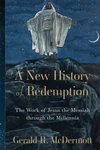
“Christianity is at bottom a religion of redemption, in which the working of God’s will is revealed, and the fallen world restored, through his deeds and presence in the passages of history. In this marvelous and remarkably accessible work, the distinguished theologian Gerald McDermott traces that working, seeking to recover and build on the work that Jonathan Edwards so nobly advanced in his own unfinished History of the Work of Redemption, the story of how man came to say yes to God’s eternal invitation. The writing even has some of the flavor of Edwards’s: rigorous and crisp in its argumentation, but lavish and loving in its evocations. This is a book for every kind of reader.”
An Invitation to the Liberal Arts
Discipleship & Christian Education
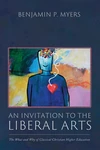
“In this small but powerful book, Benjamin Myers has distilled the meaning of liberal education down to its essence, and startled us with a direct statement of the inescapable truth: that the Imago Dei and the love of God must be at the bottom of it all, else the undertaking will be in vain.”

Fiction
“In Angel Mountain, Christine Sunderland has created a gripping and theologically rich novel, in which four remarkable people make their way through a shifting cultural landscape ringed with apocalyptic fire, revolutionary politics, and end-times expectancy.”
Did America Have a Christian Founding?
Ethics, Culture & Social Issues
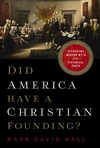
“This is a book we have badly needed for a long time, and Mark David Hall has performed a great public service in writing it. For too long the subject of Christianity’s relationship to the American Founding has been needlessly obscured in a fog of misunderstanding, oversimplification, half-truth, and deliberate misrepresentation. Hall has cut through the fog, producing a work that not only builds on the most careful recent scholarship, but presents its findings in a remarkably accessible and persuasive way. For its clear and penetrating insights into the American past and present alike, this is a book that every thoughtful American needs to read.”
Ethics, Culture & Social Issues
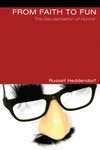
“In this fascinating study, Russell Heddendorf probes the deeper meaning of our post-Christian culture's obsession with 'fun.' He argues that as we trivialize our amusements, we lose touch with the profoundest vocation of humor: its ability to loosen the grip of the immanent, and to point us toward a transcendent reality.”
The Great Tradition of Christian Thinking
Discipleship & Christian Education
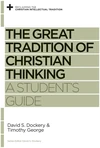
“Don’t be misled by the modesty of this book’s title. While the book surely is a winsome and accessible introduction to the subject for any inquiring student, it has much more than that to offer. Its authors are two of the most eminent figures in the field of Christian higher education, and their book reflects the immense range of their learning and experience, even though it wears its learning lightly. The result is a compact but powerful work that will be an invaluable tool for all of us who wrestle with the great task of integrating faith and learning and of showing others how the good, the true, and the beautiful find their ultimate source and meaning in God.”
Theology
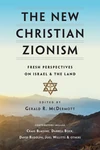
“In this exciting and extraordinarily important work, Gerald McDermott and his contributors point us toward a fresh way of understanding the relationship between Christianity and Judaism—one in which Israel is not regarded merely as a voice from the past or a transitional entity consigned to a passing dispensational role, but regarded instead as an essential and enduring presence at the heart of the church's ongoing life. In their view, the 'scandal of Zionism' is an instance of the 'scandal of particularity' at the very core of the gospel—the paradox that the biblical God has conveyed a universal message by means of a particular people and a particular land whose particularity is never to be effaced or superseded. If they are right, the implications are enormous for Christians and Jews alike.”
The State of the Evangelical Mind
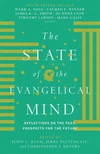
“If the richness and maturity of a tradition can be judged by the quality of debate and the healthy self-criticism that it generates, then the evangelical intellectual tradition shows itself to be alive and crackling in this stimulating and thought-provoking book. But that is not all. The book also suggests some of the ways that evangelicalism's intellectual distinctives could help to renew the life of the church, and perhaps even that of our contentious and directionless secular culture. The goal should be nothing less. Evangelicals believe that the renewal of the mind must work toward transformation of the heart and amendment of life; they believe that growth in knowledge should subserve the enlightenment of all; and that the 'deep democratization of knowledge' of which James K. A. Smith speaks in his essay is part of 'the revolution that takes place in Jesus Christ.' May this book further that renewal, that growth, and that revolution.”
Ethics, Culture & Social Issues
“Far too much recent commentary emanating from the Christian community on matters of war and peace has been ad hoc, sentimental, and ill-informed, without any grounding in the church’s profound and nuanced tradition of moral and practical reflection on the subject. Charles and Demy have sought to address this problem, answering even the most knotty questions with lucid and learned essays that provide Christians of various backgrounds—philosophers, historians, statesmen, theologians, combatants, and ordinary individuals—with an inviting point of entry into that rich tradition. The result is a book to be grateful for, one that has the potential to improve the quality of our thinking on these essential matters.”
NOTE: Only includes books currently in our catalog; not necessarily a complete list.
Ethics, Culture & Social Issues
See something wrong on this page? Report a problem