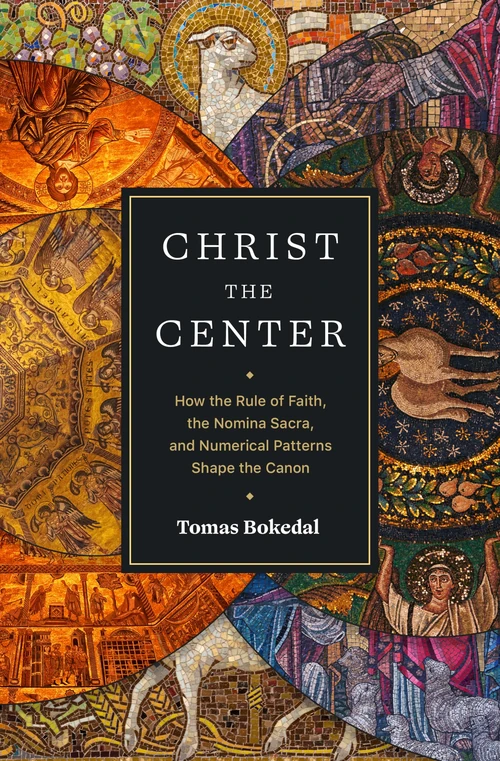
Christ the Center
- Biblical Studies & Commentaries
- History & Biography
- Publisher: Lexham Academic (Lexham Press)
- Published: 2023
FritzSearch.com earns a commission on purchases made through Bookshop.org links.
Publisher's Description
Scripture is a beautiful mosaic of Christ. In Christ the Center, Tomas Bokedal shows how the canon is shaped by numerical patterns of nomina sacra--scribal reverence for divine names. These patterns, which especially revolve around Christ, reveal the devotional and theological preoccupations of the earliest Christians. The rule of faith is not a later development; it is in the very text of Scripture. Christ the Center shows a remarkable interplay between Scripture and theology.
Endorsements (6)
“The topic of canon continues to be at the forefront of scholarly discussions today. But sometimes it seems we are rehashing the same topics over and over. Tomas Bokedal’s new volume is different. It presses these canonical discussions in new and fresh directions. Creative and well-researched, this will be an important volume for anyone interested in the origins of the New Testament.”
“That the Scriptures are also a material artifact, embodying particular scribal practices, has become a subject of increasing interest. Tomas Bokedal offers us a truly fascinating exploration of the way in which the canon, the rule of faith, and the use of nomina sacra provided the hermeneutical principles for reading the Scriptures. By exploring the familiar (and unfamiliar) material from the first four centuries, Tomas Bokedal offers original and illuminating insights, opening up further dimensions in our exploration of the Scriptures.”
“In this fascinating work, Bokedal’s main thesis is in the title—Christ the Center—yet, how he makes the argument is the unique contribution of the book. [...] Each reader will need to sift through this treasure-trove of data and consider the argument—such an effort will be repaid with helpful and penetrating discoveries. Christ the Center will be an important part of the scholarly debate over the formation and function of the Christian canon for years to come.”
“This volume makes a textual, paratextual, and theological case that Jesus Christ is the center of the biblical canon. The unique contribution of this volume is the distinctive and detailed path that Bokedal takes to establish this important claim. With careful interdisciplinary attention to the shape and meaning of biblical texts, abbreviation patterns in early manuscripts, and theological implications for the rule of faith, Bokedal weaves together several lines of inquiry that are sometimes isolated in the study of the New Testament and early Christianity. There is much for the serious student of the biblical canon to consider in this interesting and instructive work.”
“Tomas Bokedal is one of a growing number of scholars who are convinced that numerical patterns and structures were consciously embedded in biblical texts by ancient scribes, compilers, and editors in order to support the texts’ truth claims. Building on examples that others have noticed, in this book, Bokedal presents a remarkable body of data to support a new thesis. He thinks that numerical structures, both those based on the number of letters in Greek and Hebrew alphabets (22, 24, and 27) and those testifying to the value of the divine name YHWH (17 or 26), were incorporated by Christians (following an older Jewish practice) in order to direct readers to the central character of the Bible (Jesus Christ). This arithmetical structuring served a vision of Christ’s place in the triune identity and supported the emerging majority understanding of a Rule of Faith. There is compelling evidence here and Bokedal’s work deserves careful scrutiny by all who seek to understand early Christian theology and its scriptural practices.”
“The present work is vintage Bokedal: thorough, original, and thought-provoking. The axiom in canon studies is that the data, for the most part, is known. Bokedal not only addresses and interprets the known data but also adds original dimensions that, whatever we ultimately think of them, cannot be dismissed casually. The work is a gold mine of information and, at the same time, a thought-provoking take on the New Testament canon. Those interested in the formation of the New Testament canon should clear some space for it on the bookshelf!”
See something wrong on this page? Report a problem