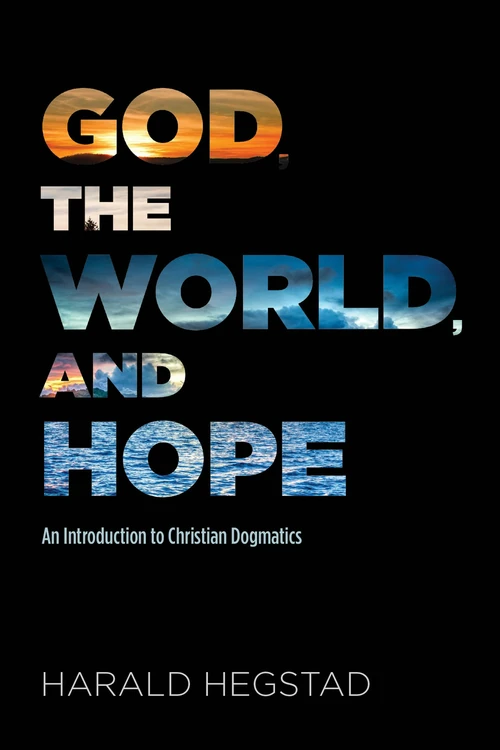
God, the World, and Hope
An Introduction to Christian Dogmatics
- Theology
- Publisher: Wipf and Stock
- Published: 2018
FritzSearch.com earns a commission on purchases made through Bookshop.org links.
Publisher's Description
Who is Jesus Christ? What does it mean to say that we are created in the image of God? What does salvation mean? What is the meaning of baptism? What characterizes the Christian fellowship? What hope does a Christian faith give for the future? These are only a few of the questions that this textbook on dogmatics takes up. This book begins the discussion of the various topics by looking at what the Bible has to say. Hegstad then examines how the church's doctrine has developed over the course of history, and discusses how the Christian faith can best be formulated today. This book understands the Christian faith as an answer to universal existential questions that challenge all religions and worldviews. Dogmatics is understood here as the expression of a Christian interpretation of life. Hegstad himself belongs to the Lutheran church tradition, but his perspective is consistently ecumenical. This introduction to dogmatics will interest not only students, but everyone who is looking for a deeper insight into the Christian faith.
Endorsements (3)
“Hegstad’s introduction to dogmatics is a welcome contribution that will help those who want to get a better understanding of the contents of Christian faith and how it can be formulated today. His ecumenical outlook and his focus on hope will provide students with a significant starting-point for their studies and for their future ministry.”
“This is dogmatics in the very best sense: an unpacking and opening up of Christian doctrines from within a particular tradition (Lutheran) for a contemporary, ecumenical, and pluralistic world. Beginners especially will appreciate Hegstad’s clear, easy to read, and pastoral style, and his engagement with scripture throughout.”
“Professor Hegstad has a genuine interest in showing that a classical Lutheran theology can be a really promising and proper entry into a real ecumenical theology. The ecumenical dialogue is in need of an ongoing dogmatic reflection. He knows both well. The result is a good reader for students of dogmatics and for others who want to see ecumenical theology develop its roots and its perspectives of hope.”
See something wrong on this page? Report a problem