Catherine Keller
Biography
Catherine Keller wrote On the Mystery.
Bios generated by automated processes. · Report a problem
Arts & Literature
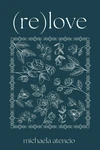
“These poems grip and liberate, they breathe you in and blow you suddenly elsewhere. With the liveliest insistence, with a succinct honesty so gentle that sorrows and hopes land like seeds in the soil of now, Michaela Atencio opens the reader into ‘this gap/between time and eternity’s collisions called the present.’”
Theology
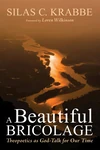
“Krabbe offers a stunning rehearsal of the key moves and histories of theopoetics as such, even as he performs a gorgeously unpretentious poetics of his own. Aesthetic and political, deconstructive and creative, historical and prophetic, this beautiful bricolage conspires at multiple levels, across and beyond disciplines, with this ancient and cutting-edge discourse.”
Theology
“A breathtaking—and breath-giving—regeneration of the ancient symbol of kenosis as a rigorously ecological practice. In concert with postmodern relationalism and natural science, the troubling teaching of sacrificial love converges with the life-and-death cycle of evolution. A great parting gift to Christians confronting the current climate turning point.”
Theology
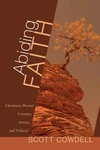
“A theology of vast learning and generous spirit, rare in its mystically tinged but resolute faith. Even the non-Giradian reader may treasure the 'modest metaphysics' and 'participatory knowing' by which Cowdell builds his postmodern bridge between traditional and progressive faith.”
Biblical Studies & Commentaries
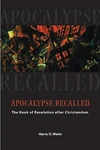
“Maier reads the Book of Revelation reading Maier. He lets its ancient witness to an anti-imperial Christianity reread Christian life in the current empire of globalization. In this adventurous return to an Apocalypse we never left, Maier captures the subversive excitement of the text. His own writing is lively with popular culture and personal anecdote, rich in its transdisciplinary scholarship, prophetic but never heavy-handed in its 'cruciform irony.'”
Ethics, Culture & Social Issues
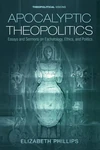
“With historical nuance, theological fidelity, and homiletical grace, Elizabeth Phillips makes an indelible contribution to the political theology of apocalypse. Apocalyptic Theopolitics ranges from Augustine to Afro-pessimism and from Lent to All Hallows Eve, teaching the crucial emancipation, in the face of oppression and catastrophe, of hope from optimism.”
Ethics, Culture & Social Issues
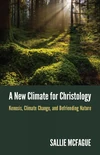
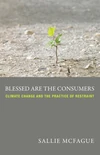
“What is more important than the question this book asks: how, in a time of climate change, shall we live well? With her blend of stirring clarity as to the stakes and narrative radiance attracting us to face them, McFague has delivered the work of a lifetime.”
Theology
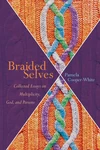
“The polyvalent beauty of the titular metaphor weaves right through this powerful new contribution to relational theology--in its most currently postmodern theory and practice. Managing to remain breathtakingly readable, this text offers its manifold gifts to the whole range of theological disciplines. Braid this book into your lives, your ministries, your studies, your selves!”
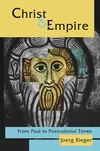
Theology
“A work of fierce luminosity; if classic didn't evoke the imperial aura that this Christology dispels, we could announce one. Christ and Empire is a stunning sequel to Christ and Culture, with a more complex Christ to resist the more manifest empire in his name.”
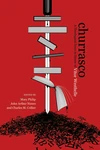
Theology
“These essays embody a many-limbed and luscious theology. It vibrates, stretches, sings, provokes, and caresses. I recommend it to thinkers concerned with space--postcolonial or ecological; with theopoetics in literature, Scripture, or doctrine; with grace under torment or in love; and even with Luther.”
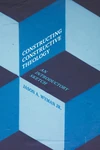
Constructing Constructive Theology
Theology
““Now that Jason Wyman has done it, we realize how badly we needed it: a trusty and capacious account of constructive theology as such. If our contextualism, pluralism, and fear of systematicity inhibited such an integral narrative, we may now welcome it not just for its engaging history and illumining expositions—but for its gathering of a disparate collective, in a time of theological precarity, into an open force field of future-creating communication."”
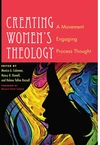
Theology
“"In its relational structure and transtemporal movement, this book works like a society of occasions in process should! It is a beautifully aimed series of reflective events, displaying the transgenerational trajectories of the feminist and womanist process theologies as they have been massively but often indirectly unfolding. By making this movement within a movement so becomingly readable and so dialogically explicit, by highlighting its intersections with other movements and its internal differences, it will lure yet another generation of thinkers into a vital conversation.”
Dancing in the Wild Spaces of Love
Theology
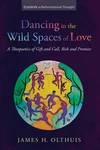
“The sheer attractive force of this meditation on the love at the heart of everything draws biblical hermeneutics, Derrida and Irigaray, trauma theory, and social ethics into an irresistible theopoetics. In this wild dance of a text, Olthuis may be loving theology itself back to life.”
Philosophy
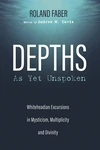
“If you only read this book’s ‘Prologue,’ you will enjoy the gift of a synoptic view of Whitehead’s thought: his multiplicity of stages and thematics, historical imbrications and future implications, come into luminous interplay with present uncertainty. And in the ecocosmic excursions with Whitehead that follow, Roland Faber speaks new depths of a creativity that unfolds—even as you read—in events of pulsating mutuality. What other process thinker evinces such a combination of philosophical brilliance and mystical adventure?”
Theology
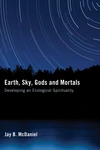
“An earth-loving, spirit touched book, warmly and lucidly accessible in its call to an ecological Christianity. It dreams and defends a needed vision of our place and hope, our possibilities and accountabilities, among fellow earth creatures.”
Ethics, Culture & Social Issues
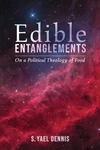
“How odd, given the consuming global challenge of food, that so little of the discourse of eco-social justice, let alone of political theology, has focused on the matter. With this multi-faceted yet attractively accessible work, S. Yael Dennis has rectified the situation. Reconsidering the notion of ‘food sovereignty,’ it provides an interdisciplinary introduction to political theology that takes the latter where it has never gone. Edible Entanglements makes a brilliant contribution to political, economic, and ecological studies in religion.”
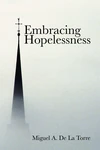
Ethics, Culture & Social Issues
“Without this embrace of hopelessness, our best aspirations turn to fatuous comfort, virtuous self-delusion, toxic benevolence. Or so I now realize. De La Torre’s challenge cuts with brilliant precision through the tissues of denial. Its embrace does not then harden into nihilism but flows into lament. So, possibility might liberate itself from optimism. It might.”
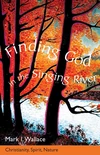
Finding God in the Singing River
Theology
“In the time of eco-spiritual crisis, Finding God in the Singing River arrives as a gift of startling and steadying insight. Releasing unfamiliar biblical symbols — the 'carnal Spirit' and 'mother bird God' — back into Christian discourse, Wallace draws eco-theology into conversations normally shunned, such as with Neopaganism and deconstruction. This is exciting thought, narrated with the loving clarity of a great teacher.”
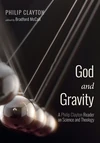
Science & Faith
“It is indeed a matter of festive gravity that Philip Clayton’s vast spectrum of writing between science and religion has been here so richly and accessibly collected. Clayton is our leading theologian of science. His panentheism, with its concept of divine action evolved so far beyond the contradictions of traditional theism, is itself a dauntless labor of emergence. So what a gift it is for thinkers in science or religion to find this treasure chest of gem-like excerpts selected from the cosmically wide spectrum of Claytonian writings.”
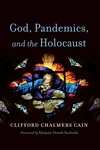
God, Pandemics, and the Holocaust
Theology
“Through his utterly gripping narration of the great pandemics of human history and the Holocaust, Cliff Cain undoes the toxic presumption that—for reasons of wrath, test, or wake-up call—God causes or permits such suffering. People of faith need Cain’s infectious, indeed contagious, alternative!”
NOTE: Only includes books currently in our catalog; not necessarily a complete list.
Theology
Theology
See something wrong on this page? Report a problem