John Milbank
Biography
John Milbank wrote The Future of Love, The Suspended Middle, and The Legend of Death.
Bios generated by automated processes. · Report a problem
Theology
“David Hart is unerringly learned, eloquent, and profound over an enormous intellectual range. Above all, this book (worth reading for the stunning Milton essay alone) shows just how the narrative vision of Christianity and its metaphysics of the simple, eternal, nonsuffering, and omnipotent God require each other. . . . With a glorious disrespect for shibboleths, Hart proclaims, with unique brilliance, how Christianity restores, fulfills, and transcends the earliest human intuitions concerning the obscure symbolism of nature, the priesthood of humanity, and the unnaturalness of death.”
Theology
“For some time now, Graham Ward has blended orthodox theology, biblical study, and cultural theory with an independent originality. Now he has added politics to this mix. The result is simultaneously a greater edge to his own theology and an imbuing of contemporary political theology with more realistic depth and practical prescience than it usually exhibits. An extremely significant volume in the present time.”
Theology
“John Wesley’s heirs have too often forgotten that he was a serious intellectual, albeit one on horseback. Not so Henry Spaulding, in this lively series of essays. They show us why the Wesleyan Holiness tradition belongs to the Christian and Catholic mainstream, by bringing together the spiritual quest for deification of the East with the ethical quest for personal and social improvement of the West. Its message is uniquely relevant for today when we are realizing how the mere pursuit of compromise engenders global chaos and conflict. We need instead to listen once more to Wesley’s view that aiming for perfection is curiously the most realistic, pragmatic, and ‘methodical’ option.”
Science & Faith
“How can Christians defend the place of natural death and the death consequent upon sin, while continuing to insist upon the undying character of true life as such and so the reality of resurrection? These penetrating essays by several of the leading theological thinkers of our times will powerfully help the reader to ponder these crucial matters of our contemporary mortality.”
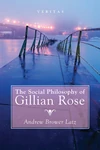
The Social Philosophy of Gillian Rose
Philosophy
“This book offers the most complete introduction to the unique thought of Gillian Rose . . . It rightly stresses Rose’s continuity with the Frankfurt school and her cleaving to the inescapability of political and historical exigencies in the face of idealistic delusions that can be covertly complicit with what they oppose . . . At the very least she urges us towards a necessary sifting and Brower Latz’s book will help to ensure that we still attend to her remarkable voice.”
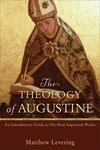
Theology
“Levering offers to students the best introduction to Augustine devised so far. He makes clear that Augustine himself was no 'Augustinian': even though he invented subjective angst and had an acute sense of sin, Augustine was also a humanist and a profound metaphysician. This book successfully inducts us into the bishop of Hippo's integral blend of soul-searching, critical reading of sacred texts, ontological reflection, and social activism.”
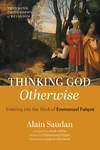
Philosophy
“This is a lucid and helpful introduction to the important work of Emmanuel Falque. It explains how Falque has significantly modulated the ‘theological turn in phenomenology’ in the directions of a greater openness to the metaphysical legacy of ‘French Spiritualism,’ a greater questioning of the philosophy/theology divide, and a Merleau-Ponty influenced insistence on the mediating role of the body as something at once hyper-apparent yet ecstatically real and intentional.”
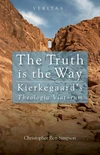
Philosophy
“Kierkegaard is the strangest phenomenon: an enormously influential writer whose thought has nearly always been misunderstood, both by its advocates and by its opponents. Christopher Simpson's book provides us at last with a reliable and subtle reading that breaks with those of both existentialism and postmodernism. He shows us just why we have not yet caught up with the reflections of the Danish philosopher and why the full reach of his critical understanding must be understood as the reach of his Christian theology.”
NOTE: Only includes books currently in our catalog; not necessarily a complete list.
Theology
Arts & Literature
Theology
See something wrong on this page? Report a problem