Andrew Louth
Biography
Andrew Louth wrote Modern Orthodox Thinkers and Introducing Eastern Orthodox Theology, and provided the foreword to Seeing God.
Bios generated by automated processes. · Report a problem
Theology
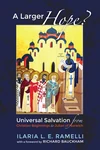
“May we hope for the salvation of all? In this compelling work, Ramelli demonstrates with careful scholarship and immense learning that there is indeed a tradition—sometimes hidden, sometimes manifest, rooted in the Scriptures and the conviction that all being is created by God—that embraces this larger hope that all beings will find their destiny in God.”
Theology
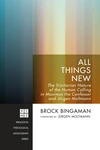
“In this important book, Brock Bingaman brings Maximus the Confessor and Jurgen Moltmann into constructive dialogue. Without in any way trying to disguise the very different idioms in which they think, Bingaman shows how both Maximus and Moltmann base their reflections on the human calling and destiny in the doctrine of the Trinity and the Paschal mystery of Christ. It is a rich and stimulating work.”
History & Biography
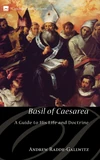
“Basil of Caesarea's gifts as church politician and monastic founder have attracted much attention in recent scholarly literature, though his importance as a thinker and theologian had been neglected in favor of his younger brother, Gregory of Nyssa. In this clearly written book, Andrew Radde-Gallwitz helps us see Basil's brilliance as a theologian. Basil of Caesarea establishes Radde-Gallwitz as one of the finest scholars of Christian late antiquity.”
Biblical Interpretation and Doctrine in Early Christianity
Theology
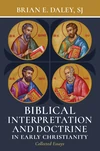
“Brian Daley, one of the finest patristic scholars of his generation, is also in the forefront of those who recovered the Scriptural inspiration of patristic thought. With great learning, and with a sharp attention to the terms they used and the arguments they pursued, he has brought to life the inner logic of the thinking of the Fathers. These brilliant studies explore the fundamental principles that lie behind his approach to patristic theology—both revolutionary and traditional.”
Theology
“In this book, Khaled Anatolios rises magnificently to the late Fr. Alexander Schmemann’s challenge to engage in liturgical theology, that is, a theology that emerges from and is nourished by the liturgy. His subject is of major importance, with enormous ecumenical repercussions: the doctrine of the atonement. From his immersion in the Byzantine liturgy, he offers the central theme of doxological contrition, and pursues this in dialogue with the Scriptures and with an impressive array of theologians—Athanasius, Cyril, Maximus, Anselm, Aquinas, Nicholas Cabasilas, Scheeben, Staniloae, Balthasar. Deification through the Cross is a triumph of sympathetic dialogue, transcending the easy dichotomies of much twentieth-century theology.”
Early Christian Readings of Genesis One
Science & Faith
“This is a brave and much-needed book. A church that tries to ignore the Fathers of the church deprives itself of a valuable resource. Craig Allert seeks to show how attention to how the Fathers understood Genesis 1 deepens our own understanding of creation. He cuts through a lot of misunderstanding and ignorance of the Fathers enabling us to hear them once more. Professor Allert's proposal is not so much 'Back to the Fathers' as 'Forward with the Fathers.'”
Theology
“In this remarkable book, Dr. Mitralexis seeks more than an exposition of a central notion in St. Maximus the Confessor's metaphysical vision, but rather a genuine fusion of the horizons, in a Gadamerian sense, so that his understanding of Maximus is informed by the development of a relational ontology by the likes of Zizioulas and Yannaras, whose own thought has been inspired by their reading of Maximus. The result is a bold and original contribution to ontology and metaphysics.”
Theology
“The original edition of From Nicaea to Chalcedon established itself immediately as the best introduction to the Greek patristic tradition in the golden age of the first four councils. This new edition surpasses the old, not only bringing it up to date after a quarter of a century of unprecedented scholarly activity, demonstrating an easy command of the shoal of new literature, but also introducing students to new approaches, some of which Young has herself pioneered. This is an indispensable work, revealing new insights on every page.”
Theology
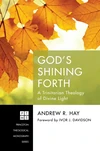
“God's Shining Forth is a very remarkable book. It stands firmly in the tradition of Protestant orthodoxy and demonstrates its richness, drawing on the fathers and Western scholasticism, as well as the magisterial reformers, Luther and Calvin, and the great Protestant scholastics, scarcely known nowadays, even by name, as well as Jonathan Edwards, and more recent Protestant theology, especially Karl Barth. Andrew Hay deals trenchantly, but graciously, with more liberal theologians. In all this he manifests deep and charitable learning. The central theme--God's radiant shining forth as light--develops a central confession of the Nicene Creed, of Jesus Christ as 'Light from Light.' The theme of light is also central to the tradition of Eastern Orthodoxy, as Hay is well aware, so that this book is very much an ecumenical challenge, inviting theological dialogue on a theme central to Eastern Orthodoxy, with its understanding of the experience of God's uncreated light in prayer. This is a timely and powerful book.”
In Accordance with the Scriptures
Theology
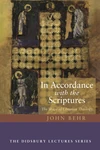
“John Behr is quite exceptional among modern Orthodox theologians. His range is enormous—from exacting textual scholarship in editions of great patristic works, a major study of St. John’s Gospel, to short, attractively presented works aimed at the general reader. Now, following the early fathers in drawing from the Scriptures, he presents a vision of Christ on the cross, in death giving birth to Christians—the children of the church as virgin mother.”
Naturally Human, Supernaturally God
Theology
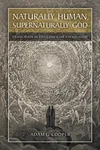
“In this study, Adam G. Cooper demonstrates an enviable mastery of the writings of his chosen figures, as well as a thorough grasp of the dogmatic tradition as a whole. Most important of all, he foregrounds for us the one truly ultimate message the church has for the world." —Aidan Nichols, O. P. Blackfriars, Cambridge "In an astute theological move, Cooper makes deification central to his comparative analysis of three theological emphases: reason (Réginald Garrigou-Lagrange), relevance (Karl Rahner), and revelation (Henri de Lubac). The result is a book that sheds new light on three Catholic theologians whose mutual disagreements have been the topic of much debate. By making deification the focus, Cooper unearths unexpected points of convergence among the three twentieth-century theologians, while also acknowledging significant areas of disagreement. In this nuanced study, de Lubac emerges as the theologian who successfully remedies two weaknesses: focusing too much on the individual soul (Garrigou-Lagrange) and obscuring need for the church (Rahner)." —Hans Boersma Regent College "Vatican II gave rise to polarized Concilium and Communio schools of Catholic theology, and the past decade has seen further divisions in light of the fruitful renewal of Thomism. How welcome, then, is this erudite and largely irenic study of Garrigou-Lagrange, Rahner, and de Lubac on deification. Even while making his own preferences clear—not least in rightly challenging the Christology of Rahner—Cooper rises above polemics to exhibit specific ways in which each theologian, drawing upon the wells of revelation and reason, contributed to enriching the doctrine of deification. This book shows the path for appropriating the best elements of twentieth-century theology." —Matthew Levering Mundelein Seminary “Adam G. Cooper takes up Philip McCosker's observation that ultimately the way one configures the ‘and’ between nature and grace depends on the way one configures the ‘and’ between humanity and divinity in Christ. With reference to this principle, he offers his readers a fascinating tour through the theology of three of the leading Catholic theologians of the twentieth century—Réginald Garrigou-Lagrange, Karl Rahner, and Henri de Lubac. All three agreed that the meaning of human life is found in deification, but they differed over the process itself. Cooper offers his readers an accessible and engaging tour through their agreements and differences.” —Tracey Rowland John Paul II Institute, Melbourne "Adam G. Cooper accomplishes a remarkable ecumenical task in this fascinating book. Becoming God, deification, as the goal of human creation is a doctrine associated especially with Eastern Orthodoxy. Cooper shows how some of the liveliest movements in twentieth-century Catholic theology, which lie behind the Second Vatican Council, converge in the notion of deification. This is not simply true of representatives of the nouvelle théologie, such as Henri de Lubac and Karl Rahner, but also of the perceived opponent of such novelties, the Dominican Réginald Garrigou-Lagrange. Cooper does more than shed light on pre-conciliar theology; he also sets these theological movements in their historical and cultural setting. This is a necessary resource for understanding the theology of the twentieth century.”
Theology
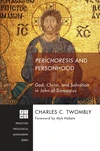
“St. John Damascene famously said, 'I shall say nothing of my own,' and much modern scholarship has taken him at his word. Yet, as Charles Twombly shows, John Damascene was a truly original theologian. His notion of perichoresis, 'co-inherence,' though it has precedents in earlier Fathers, becomes in his theology a golden thread, drawing together his understanding of the Trinity, the incarnation, and our union with God, our deification. This lucid and profound study makes a major contribution to our understanding of John and his enduring significance.”
Prayer & Spiritual Formation
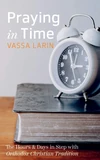
“We live in an age in which time has been flattened out and proceeds relentlessly—24/7. Sister Vassa Larin draws on the wisdom enshrined in the prayer offices of the Orthodox Church to enable us to mark the hours of the day and mark the days of the week. In this way we shall discern the rhythms and cycles of time and thus learn to redeem it.”
Theology
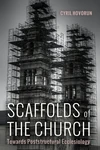
“Cyril Hovorun is emerging as one of the foremost ecclesiologists of modern times. . . . Hovorun's analysis has profound insights for ecumenism, as well as for the struggle for some practical coherence within the Orthodox Churches themselves.”
Theology
Foreword
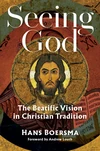
“Remarkable. . . . Hans Boersma seems to me a one-man ecumenical movement, as he explores with rare skill the different ways of thinking that have expressed Christian faith and hope.”
Philosophy
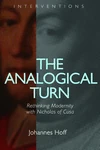
“In this fascinating book Johannes Hoff shows us how Nicholas of Cusa sought to express the insights of the classical and medieval worldview in the conceptuality of the modern. With enormous learning and great insight, Hoff's Analogical Turn illuminates some of the urgent problems of philosophy and theology today.”
Christian Living
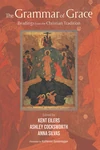
“Grace is central to Christianity, but also–maybe therefore—highly contentious; it could be argued that all controversies among Christians revolve round the notion of grace. This wonderful anthology of passages—drawn from treatises, rules of living, prayer and praise—illustrates both the richness of grace, as its manifold signs are explored, and a sense of the one thing necessary: Christ and his grace.”
Theology
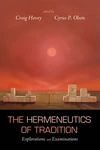
“In this collection of essays, Craig Hovey and his fellow contributors open up a discussion of fundamental importance. Philosophers, such as Gadamer, MacIntyre, and somewhat earlier, Blondel, recovered the role of tradition in human understanding. These essays explore, in different trajectories, what this can mean for theology. After pursuing confessional and historical trajectories, the role of the liturgy in preserving and refining tradition is discussed. Tradition is restored to the center of Christian hermeneutics, without any disguising of ambivalence and cultural problems raised. This is a hugely important symposium.”
History & Biography
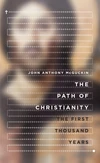
“John McGuckin has already provided several comprehensive guides to Eastern Orthodoxy. In this book, he discusses the history of the whole church during the first millennium, when there was yet no schism between East and West. He discusses not simply the public story of the institutional church, as is customary, but pays careful attention to what it was like to be a Christian in this period: how Christians prayed and worshiped, and how they dealt with wealth and poverty, not to mention slavery. Fr. John tells his story with immense erudition and insight, but simply and directly. The result is a rare achievement of immense value to all Christians as they seek to understand their past—and their future.”
NOTE: Only includes books currently in our catalog; not necessarily a complete list.
History & Biography
See something wrong on this page? Report a problem