John Milbank
Biography
John Milbank wrote The Future of Love, The Suspended Middle, and The Legend of Death.
Bios generated by automated processes. · Report a problem
Philosophy
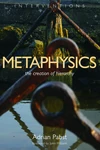
“This book does nothing less than to set new standards in combining philosophical with political theology. Pabst's argument about relationality has the potential to change debates in theology, philosophy, and politics.”
Theology
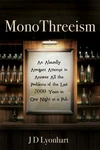
“Jonathan Lyonhart has produced an entertaining and vivid guide to the central Christian doctrine of the Triune God. He has truly succeeded in rendering its more technical aspects accessible to the ordinary reader without surrendering its inaccessible mystery and its invitation to wonder.”
Philosophy
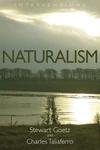
“Demonstrates with succinctness, brilliance, and precision that modern Anglo-Saxon naturalists are not rationalists but . . . are, in fact, the enemies of reason, which can only have any reality if the physical world has a spiritual, rational source.”
Theology
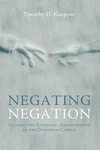
“At last, a book about Dionysius that ends the myth of an alternative 'negative theology' and avoids anachronistic construals in terms of either linguistic analysis or pure phenemenology. Instead, we are presented with the full-blown strange world of ancient oriental Christianity where names are angels and liturgical action lies beyond either affirmation or negation. Yet it was just this world that later resonated in the medieval West, and can still resonate with us today, if we are prepared to be genuinely subverted.”
Philosophy
“Michael Di Fuccia has produced the most major study of Owen Barfield so far. He shows just why the future of theology may belong to Barfield's seemingly wilder, but more metaphysically penetrating, style of orthodoxy. Barfield realized early, that in order to believe now, one must disbelieve much of what passes today as accepted secular wisdom. The alternative is some version of theistic positivism, credible only to the emotionally immature. I thoroughly recommend this new book to all sensitive and reflective readers.”
Philosophy
“In his well-researched and brilliantly-argued first book, Jacob Holsinger Sherman shows that the metaphysics of participation are inseparable from the practice of contemplation. He shows that this aspect of spiritual engagement has been just as fundamental for philosophy as for theology. The radical implication is that our current divisions between the two disciplines, alongside our over-adulation of cold academic detachment, may both lack historical warrant and be existentially and culturally perilous.” —Catherine Pickstock University of Cambridge “Does ‘seeing God’ have philosophical meaning or relevance today? Lucid and learned, Partakers of the Divine presents a frequently misunderstood strand of Christian reflection. In this profound and trenchant work, Jacob Holsinger Sherman offers a penetrating case for the contemporary application of ‘the vision and the faculty Divine.’” —Douglas Hedley University of Cambridge “In this timely and innovative study, Jacob Holsinger Sherman parses afresh the ancient idea of a philosophy which is also contemplative. Whilst Pierre Hadot recalled late twentieth-century readers to this rich tradition in late antique philosophy, Sherman now gives it fresh contemporary exemplification through incisive re-readings of Anselm and Cusanus and creative links to contemporary philosophy of religion, both continental and analytic. This is an important first book of impressive range and spiritual insight.” —Sarah Coakley University of Cambridge “In his impressive first book, Jacob Holsinger Sherman successfully shows that the main lines of Christian spiritual practice are inseparable from ascription to a metaphysics of participation and vice versa. Participation was experienced, while spiritual practice was interpreted as hierarchical ascent through grades of being towards final union with the Triune God.”
Ethics, Culture & Social Issues
“Santos brilliantly shows how only a politics of the cross provides us with a true theoretical insight into the increasing instance of disaster and a true practical measure of restorative response.”
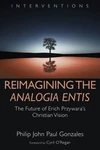
Reimagining the Analogia Entis
Theology
“Philip Gonzales here achieves a remarkable expansion and updating of the analogical metaphysics of Erich Przywara. Analogy comprises both being and revelation and a tensionality not just between God and creation but between essence and existence, past and future, potential and fulfillment. Therefore a metaphysics of analogy must be as much believed in as argued for, lived as much as believed, and hoped for through a welcoming of the fire of sanctity as much as lived. More radically than ever, Gonzales suggests that the biblical, Catholic horizon offers the only credible philosophy that is not a mere surrender to despair.”
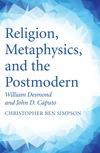
Religion, Metaphysics, and the Postmodern
Philosophy
“The more-than-fair run that Simpson gives Caputo for his money only serves the more to show that it is Desmond who offers us the real postmodern (because also postsecular) gold which permits us all to run the race to the real infinite end. Let us hope that the second edition of this fine book finally puts to rest the theologically silly season of supposedly 'postmetaphysical' difference, immanence and hypostasised absence, and further opens up the new metaphysically realist harvesting of dynamic mediation and participated transcendence.”
Theology
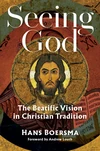
“Hans Boersma’s Seeing God provides a richly comprehensive historical account of theologies of the beatific vision. But it also successfully mediates between the Nyssen account of eternal progress into God and the Thomist account of an eternal finality, and it properly modifies Aquinas by insisting that the final vision will be one achieved essentially and not accidentally in the resurrected body. This is a wonderful achievement.”
Ethics, Culture & Social Issues
“In this splendidly dense yet lucid first volume of his new project, Oliver O'Donovan richly succeeds in re-connecting a neo-orthodox stress upon dogma with an earlier pietist stress upon personal formation. We are thereby inducted into a stance where vision and commitment, belief and action become fully inseparable. O'Donovan realizes that such an integral theology is what responsibility requires of us in the face of a double threat to our planet and to our humanity.”
Philosophy
“This significant new book amply demonstrates that the relationship of Christianity to pagan teaching did not really correspond to what we today take to be the distinction between faith and reason. Instead it was a matter of complex continuities as well as discontinuities in terms of practice and spiritual stance as much as theoretical affirmation. A very important corrective.”
Philosophy
“The Analogical Turn by Johannes Hoff for the first time locates Nicholas of Cusa without anachronism as a post-nominalist realist, who reworked the inherited analogical vision of Christian theology in a simultaneously late Gothic and Renaissance manner. As Hoff explains, this idiom offers us a new way forward today. . . . Much more than a monograph on a historical figure, this imaginatively crafted and extremely scholarly volume constitutes one of the most significant works of theology in the twenty-first century so far. I believe that it will exert a very considerable influence on future theoretical reflections both within theology and without.”
Theology
“David Hart is already the best living American systematic theologian. The Beauty of the Infinite is his first major work.”
Christian Living
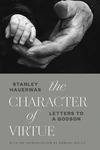
“I think I’m supposed to say that this book shows ‘a gentler side of Stanley.’ But as far as I am concerned, there was never any other. Typically, for Hauerwas, it combines theoretical exposition with a direct, interpersonal context. . . . What we have here is an exemplary short summa of the practical Christian virtues in the form of an enactment of the crucial virtue of godparenthood.”
Arts & Literature
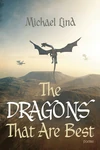
“These remarkable poems are nothing short of Lyrical Ballads for our times. With consummate formal skill and humor, Michael Lind eschews neither musicality nor direct meaning to express plangent, serious, and subtle insights about our current everyday, the faraway past, and inter-continental disturbances.”
Science & Faith
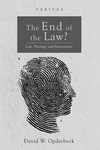
“This excellent book shows in a highly lucid fashion how contemporary neuro-scientism trades upon a notion of legality to which it has no right, in order to deny the very ground of the possibility of law, which is the law-making capacity of spiritual creatures that participates in the eternal law of God. No previous book has so successfully shown how scientific positivism trades on the incoherence of legal positivism much more than the other way round. It seriously illuminates the vicious biopolitics of our time and indicates the way beyond.”
Theology
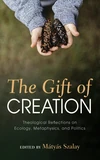
“This wonderful collection of sophisticated yet accessible essays brings together thinking about ecology with the philosophy of the gift. Together they tend to promote the crucial argument that a humanist ecology requires the undergirding of a theology of creation and an authentic version of natural law.”
NOTE: Only includes books currently in our catalog; not necessarily a complete list.
Theology
Arts & Literature
Theology
See something wrong on this page? Report a problem